
Remote Vs On-Site Hiring Statistics: Insight for Modern Business
Executive Summary
Work mode is one of the most hiring concerns for managers. Remote work, once neglected by most employers, is now breaking the traditional work from office. Earlier, employers were scared of hiring remote workers as they thought it was tough to manage them. The pandemic broke all the myths regarding it and showed the world a new way of working, which is work from home. Hiring managers or policy workers are now implementing this in their work culture. Employees are now also searching for more remote or hybrid work as compared to on-site work. The best thing about remote hiring is that an employee can hire the best employee from anywhere in the world.
However, this working method is not possible for every industry, as some of them require full-time work. Industries like manufacturing, healthcare, retail, transportation, and others all require in-person work, which is inversely proportional to on-site hiring. On the other hand, in remote hiring, it takes time to learn about the employee’s mindset, while in on-site hiring, you can quickly analyse the behaviour of employees.
Key Takeaways
- The pandemic has increased interest in remote jobs, as employees are actively looking more remote and hybrid job options.
- Over half of U.S. workers prefer a hybrid model to working remotely or fully in the office.
- Businesses that have remote working policies typically have fewer recruiting problems than businesses that mandate full-time office attendance.
- The right to work flexibly and/or hybrid is one of the most effective strategies that organizations implement to recruit competent workers in the current job landscape.
- Major change in the work policies, with 74% of CFOs implementing remote working during COVID-19.
- The three main difficulties with working remotely are inadequate collaboration, lack of motivation, and poor performance management.
- Recruiting through remote hiring opens up the opportunity for businesses to hire skilled workers from a much broader talent pool, regardless of location.
- Employers are increasingly adopting skills-based hiring, which places more value on candidates’ skills and experiences than just their academic credentials.
- There is a greater focus on investing in AI, upskilling and reskilling programmes, and changing the way workforces are planned and prepared for future job requirements.
The Growth in remote jobs: Where it started
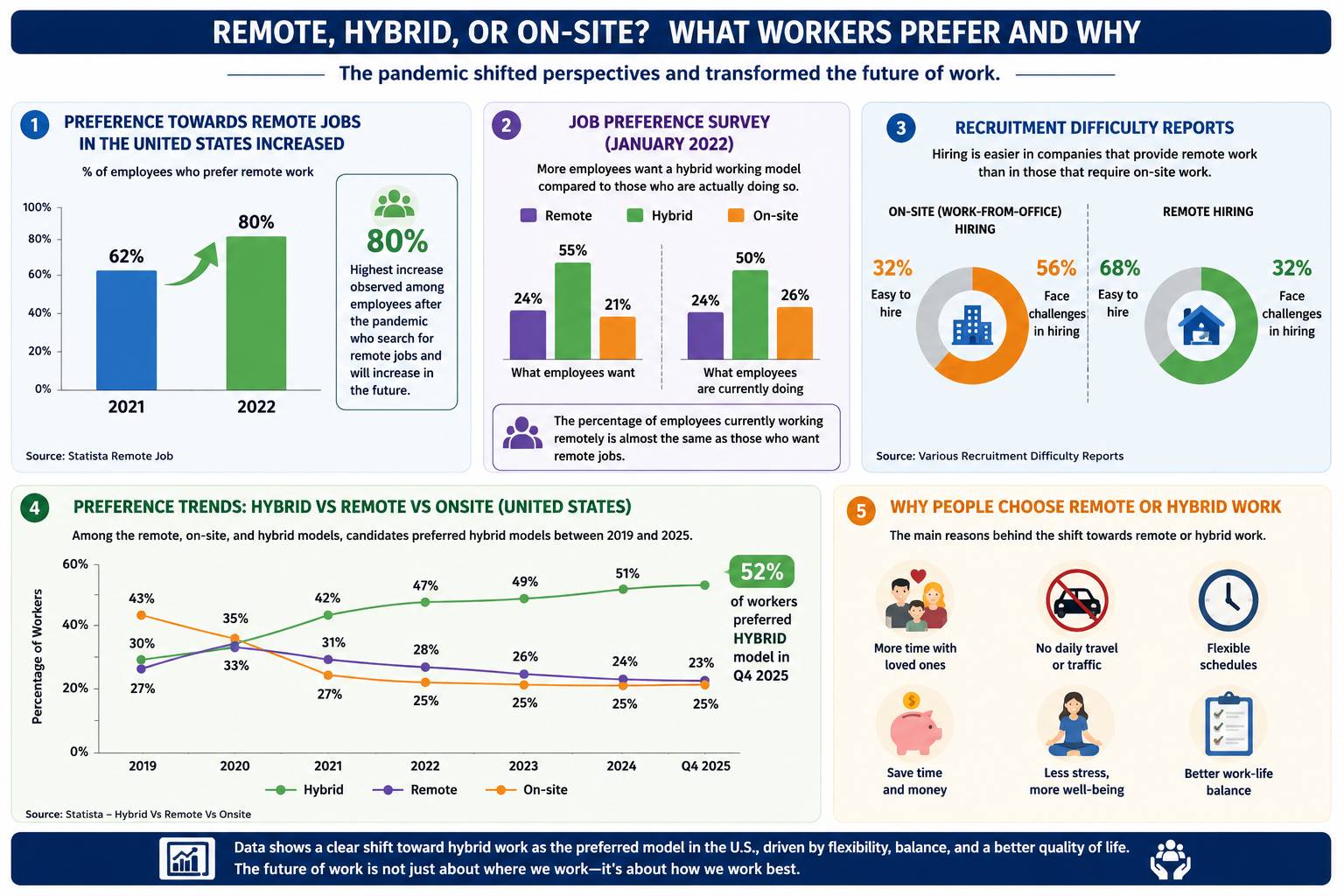
Each hiring method, whether it’s remote or on-site, comes with its own ups and downs. It is quite a debatable subject for companies; some say remote jobs provide good opportunities, while others say on-site jobs are important for a smooth work environment. COVID-19 has taught us that with proper management, you can also work from home. It changes employers’ perspective, shifts the traditional on-site hiring method, and brings a culture of remote or hybrid hiring. According to Statista Remote Job, the preference towards remote jobs in the United States increased from 2021 to 2022. The highest increase observed among employees after the pandemic who search for remote jobs and will increase in the future is 80%.
According to the Job preference survey in January 2022, More employees want to work in a hybrid working model compared to those who are actually doing so. However, the data shows that the current employees working remote job is moreover same as the people who want remote jobs. The recruitment difficulty reports state that the hiring process in companies that provide remote work is easier than the company who ask for on-site hiring. In the on-site hiring, 32% business says its easy to hire, while 56% says they face challenges in work-from-office hiring.
Among the remote, on-site, and hybrid models, the candidates of the United States preferred hybrid models between 2019 and 2025. Data shows that, in the fourth quarter of 2025, around 52% worker preferred the hybrid model in their work culture (Hybrid Vs Remote Vs Onsite). The main reason behind people choosing remote or hybrid work because they spend more time with their loved ones and get rid of daily travel, traffic, timelines, and many other things.
The Top Factor That Employers Use to Attract Candidates
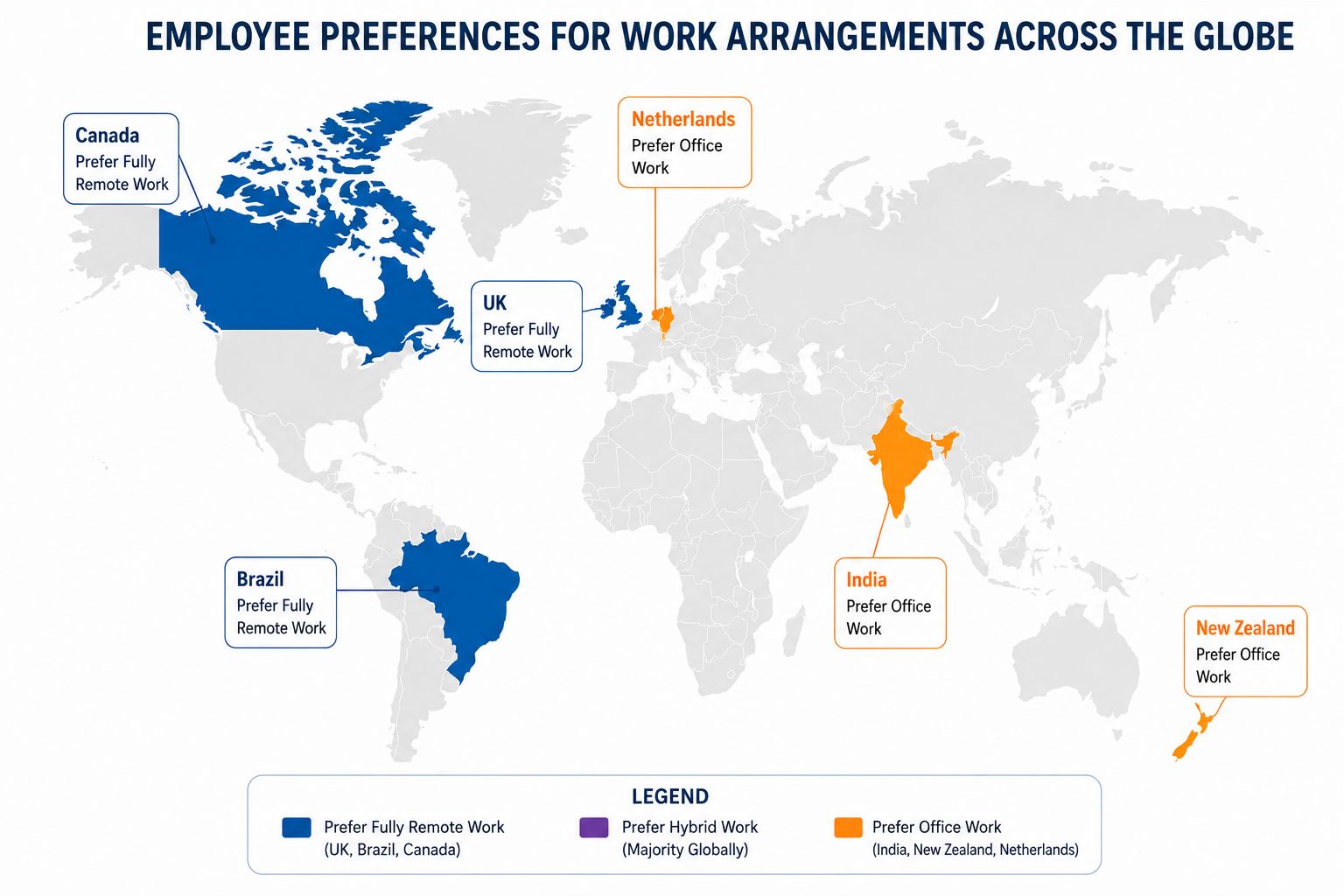
Employees play an important role in the smooth running of the business. Restraining them in the long term is what many employers find difficult. As per the Statista attracting report, in the United States, the popular method to attract in 2024 is providing hybrid work and flexible work to the employees. Hiring remote workers is one of the most important aspects to attract employees. Other than this, employees all over the globe have various preference majority of them think that hybrid work is more favourable than fully remote work. While employees in India, New Zealand, and the Netherlands preferred office work. Whereas in the UK, Brazil, and Canada majority of employees choose fully remote roles (Working from home).
In the current time, 74% of CFO implemented remote working methods after the COVID-19 crisis. Both the employer and employees see opportunity in remote work that includes increased productivity, employee satisfaction, and flexibility. However, the report also shows that most of the employees who face problems in remote work are low team collaboration (34%), lack of motivation (17%), and lack of performance management (17%). But with the right policies, employees can overcome all the challenges and determine which hiring method is suitable for their business.
Why remote or hybrid work is becoming normal for business
Work habits have undergone significant changes in the past few years. The temporary solution was beginning to become a long-term plan for many companies. The workplace of today is no longer a place where employees are expected to work in on-site offices, but remote or hybrid working has also become a vital part of talent acquisition and retention.
The pandemic really changed people’s perceptions of work and workplace flexibility, according to the WEF Amarican works. With this shift, many workers turn to jobs that are flexible with working from home or in a hybrid environment as the preferred option, as it allows them to enjoy a better work-life balance and save on commute time.
These deals are also benefiting businesses. According to the WEF WFH reports, many businesses believe that a hybrid work strategy plays an essential role in their business growth. Some companies have urged their staff to come back to the workplace, while others are learning that flexibility is the key to greater employee satisfaction and retention.
In addition, the McKinsey report says companies are still working out how to strike the right balance between productivity, collaboration, and employee preferences. Although there isn’t any single working criterion that fits all businesses, it’s clear that workplace flexibility is likely here to stay.
Challenges that remote work brings
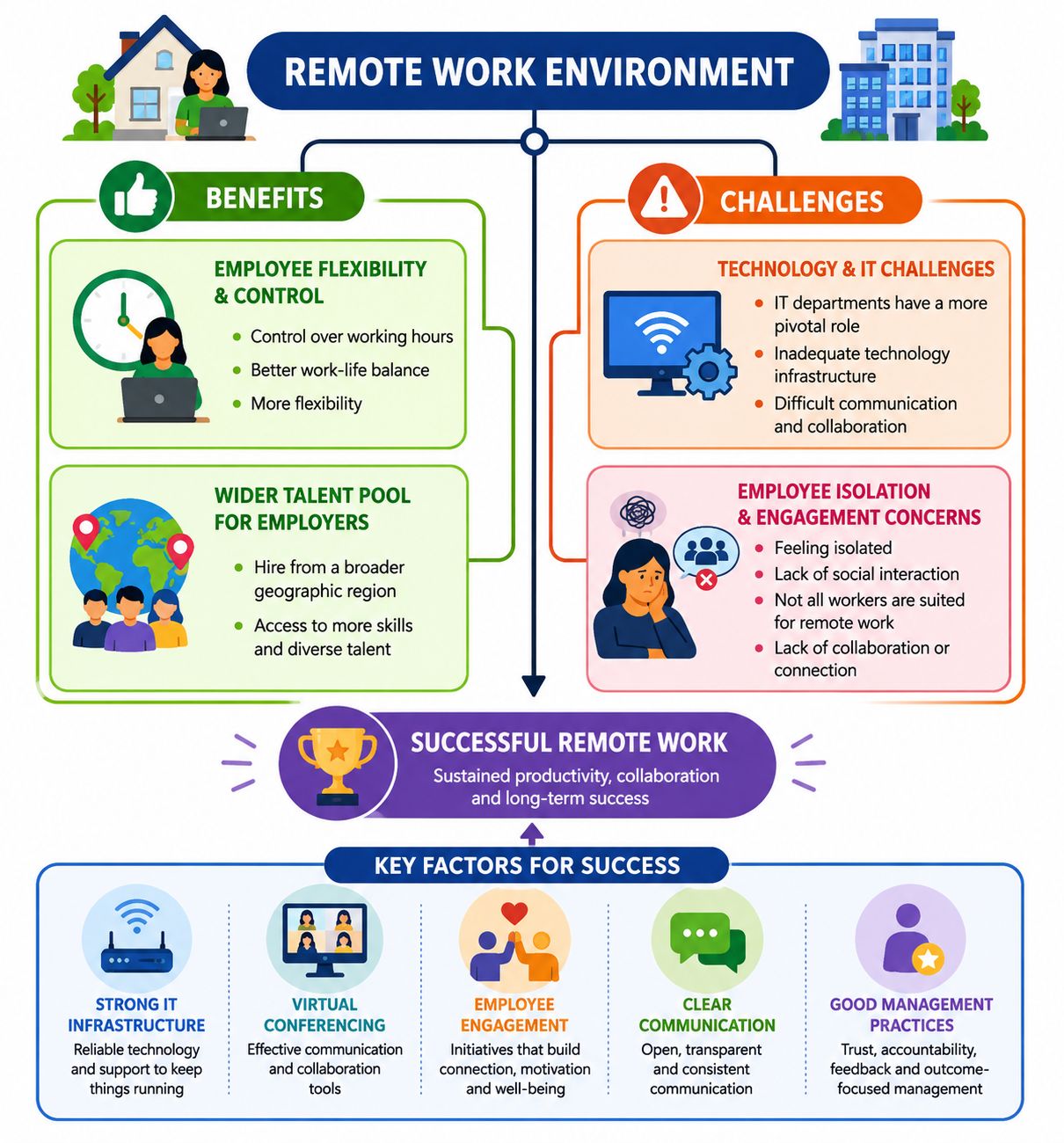
There are several benefits for both workers and employers in the remote work environment. Employees are given more flexibility and control over their working hours, and employers can hire workers from a broader geographic region.
But remote work has its downside, too, that companies simply can’t overlook. IT departments are now playing a more pivotal role in helping people work remotely and keeping things running, according to Statista’s impact of remote work. If the technology infrastructure is not right, it can be difficult for remote teams to effectively communicate and collaborate.
Staff support is a concern as well. According to Poland 2025, reports certain employees working from home are feeling isolated and lack social interaction. While not all workers are suited to work in a remote setting, some workers don’t experience the collaboration or connection that can be found in the presence of others.
That’s why many have increased their focus on communication technologies, virtual conferencing, and employee engagement initiatives. Gartner’s findings indicate that the key factors to making remote work a success are clear communication and good management practices. Businesses lacking proper support for teleworkers can struggle to sustain productivity in the long run.
Skill-based hiring is the most essential part of hiring and is gaining popularity
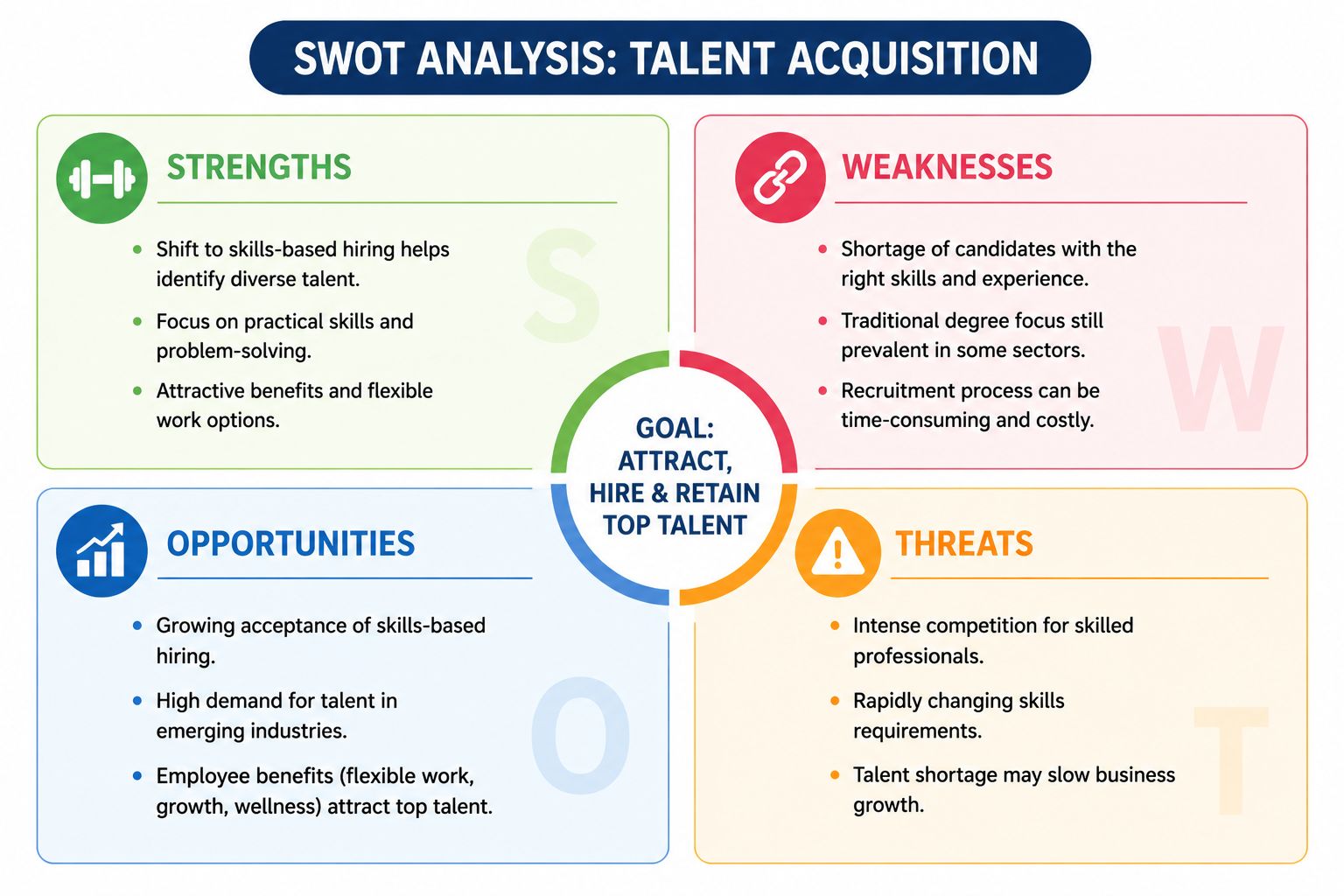
Finding employees is more difficult than ever. Employers have a hard time getting workers with these credentials, particularly for technical or specialized jobs. This has given rise to evolving talent assessment practices by businesses.
One of the biggest trends is skills-based hiring. As per the skill-based hiring report, a greater number of companies are more interested in the skills and demonstrated abilities of a candidate. This can assist employers in finding successful candidates who might not have taken the traditional career route.
Meanwhile, there is still a lack of talent, which is causing recruitment problems. According to Statista, many businesses report issues in recruiting candidates with the proper skill sets and experience. In dynamic industries, there’s a need for new talent that far outstrips the availability of talent.
Employers are increasingly providing a variety of benefits and incentives to attract applicants. According to Statista, flexible working arrangements, career growth, and health and wellness benefits are becoming vital factors in the recruitment process. Although degrees are still important in certain professions, their emphasis is shifting to flexibility, problem-solving and practical experience rather than a degree.
The future workplace will be shaped by Continuous Learning and AI
AI is fast becoming one of the most significant trends in the future of work. Companies are deploying AI technologies to boost efficiency, automate repetitive tasks and help make decisions. Consequently, there is an ongoing surge in the need for AI skills.
Statista AI hiring reports that AI hiring activity has taken off across several sectors. There is a strong demand among organizations for workers who have knowledge in automation, data analytics, and machine learning.
Meanwhile, employers are aware that technology advances at a rapid pace, and employees must always be trained to stay up-to-date. According to the research on tech recruitment and training strategies worldwide, it is observed that many companies are currently engaged in upskilling and reskilling initiatives to ensure their employees have the necessary skills for the jobs of tomorrow.
The remote job is also providing new opportunities to an inclusive workforce. In “ Remote work can break down barriers to employment ”, the World Economic Forum (WEF) states that flexible work options can open doors to those who have historically faced difficulties in securing traditional employment.
The future of work is likely to be characterized by flexibility, technology, and ongoing training and development. Companies that are ready for these shifts and proactively invest in their employees are likely to be better positioned for success in today’s highly competitive marketplace. The future of the workplace is a mystery in ten years, but remote work, AI and skills-based hiring will be major contributors.
Final Thoughts
In short, remote and on-site hiring come with their pros and cons. With employees seeking flexibility and improved work-life balance, remote/hybrid work has surged in popularity in recent years. At the same time, companies are changing their hiring methods by focusing more on skills, training, and new technologies like AI. Although not all industries are 100% remote, it’s not a secret that flexible working is becoming the norm for business. The companies that embrace these changes and invest in their staff will have better opportunities to grow and be competitive in the future.