
Contract vs Permanent Hiring: Which Recruitment Model Works Best?
Executive Summary
Technology has become an important part of today’s economy. From AI to technological advancements, they help a business grow in this competitive world. Though it is growing, it is bringing a talent shortage for employers. It is hard to find a skilled professional who can efficiently work and bring innovation single-handedly. Thus, hiring committees and employers are searching for options to fill these gaps, such as contract vs permanent hiring.
The more technologically advanced the world becomes, the more it demands the right skills and expertise. Whether permanent or contractual, employees are taking every type of job role to build their careers. While some candidates are seeking a permanent role, others are opting for a contract role to enhance their skills and knowledge, gain exposure, and strengthen their resumes. Both Contract and permanent hiring has its own pros and cons, and in this article, we will discuss every aspect of hiring and how it benefits both employees and employers.
Table Of Content
 Highlights
 The Hiring Intent Growth in India in 2026
 Analysis of Permanent Hiring and Contract Hiring
 Permanent Hiring
 Contract Hiring
 Which is better: a contract or a permanent hire?
 Factors you should consider while hiring in Gen Z’s world
 Financial Distribution between Contract Hiring and Permanent Hiring
 Choosing the right hiring method for your business
Highlights
- Permanent hiring provides long-term stability, whereas contractual hiring provides flexibility. (Global Partner Solutions)
- Nearly 70% of total jobs are projected to be in the automated industry by 2030. (Statista)
- The hiring intent in India increased from 2014 to 2025, reaching an estimated 29.5%. (Statista)
- The flexi-staffing system in India has created 92K new jobs and continues to drive demand. (Indian Staffing Federation)
- Contract hiring provides flexibility, on the other hand, permanent hiring provide stability.
- The job satisfaction among Gen Z has risen from 21% to 31% over the last four years. (World Economic Forum)
- The turnover rate of temporary or contract employees has decreased compared to previous year (Statista)
The Hiring Intent Growth in India in 2026
The India economies is known as one of the fastest growing economics in the world. According to MOSPI’s latest release, the overall Work Population Ratio is 52.2% in April 2026. The industrial revolution is forcing employers or organization to provide hybrid work. As studies shows their is nearly 70% of automated jobs in the formal sector projected by 2030. On the other hand, technology-driven innovation will also create jobs for over 90 million workers (Statista). According to Statista, hiring intent in India from 2014 to 2025 was estimated at 29%, up from 17.7% the previous year. The flexi staffing system in India has generated 92K new jobs and continues to drive demand. However, the general staffing industry hiring growth is 5.5% YOY, whereas in the IT sector it shows positive growth of 16% YOY (Indian Staffing Federation).
These data help employers identify market trends and business demand, and strategise their contract vs permanent hiring. And whether long-term or short-term, which ecosystem will work for their company.
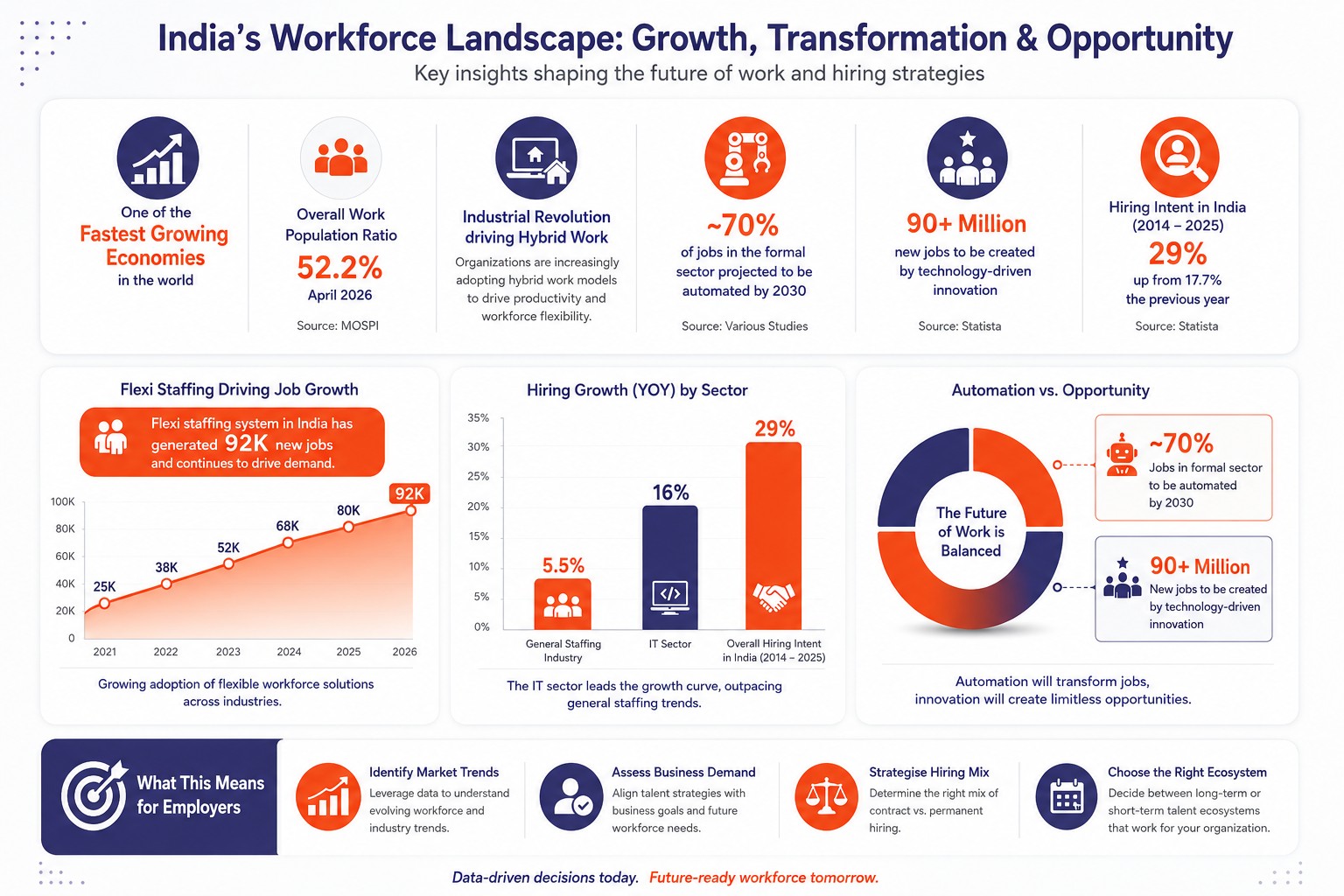
Source: Talent Gait, MOSPI’s latest release, Statista, (Indian Staffing Federation)
Analysis of Permanent Hiring and Contract Hiring
Both hiring process has it’s own pros and cons. The table below provides detailed information on each hiring method.
Permanent Hiring
| Pro’s | Con’s |
|---|---|
| People invest in the company's long-term growth | Benefits such as insurance, taxes, and compensation are overall expenditures |
| Provide consistency and a stable workforce | Difficult to enjoy flexibility and freedom |
| Employees have deeper company knowledge and follow all rules and regulations | Bound to invest skills and knowledge in the company, as they are not allowed to do freelancing |
| Employees trust each other because of strong, dynamic, and collaborative work | The employer has overall control over their employees |
Contract Hiring
| Pros | Cons |
|---|---|
| Workers are paid hourly and according to the work they provide | Don't have work security and benefits. Get only the things that they worked for. |
| Provide less commitment to the employers | Not provided any job training or new skills learning |
| They can use their knowledge and skills anywhere without any restriction | Workers cannot leave their work until they have finished their contract |
| Fills the role faster and without any delay | Lack of stability and job satisfaction |
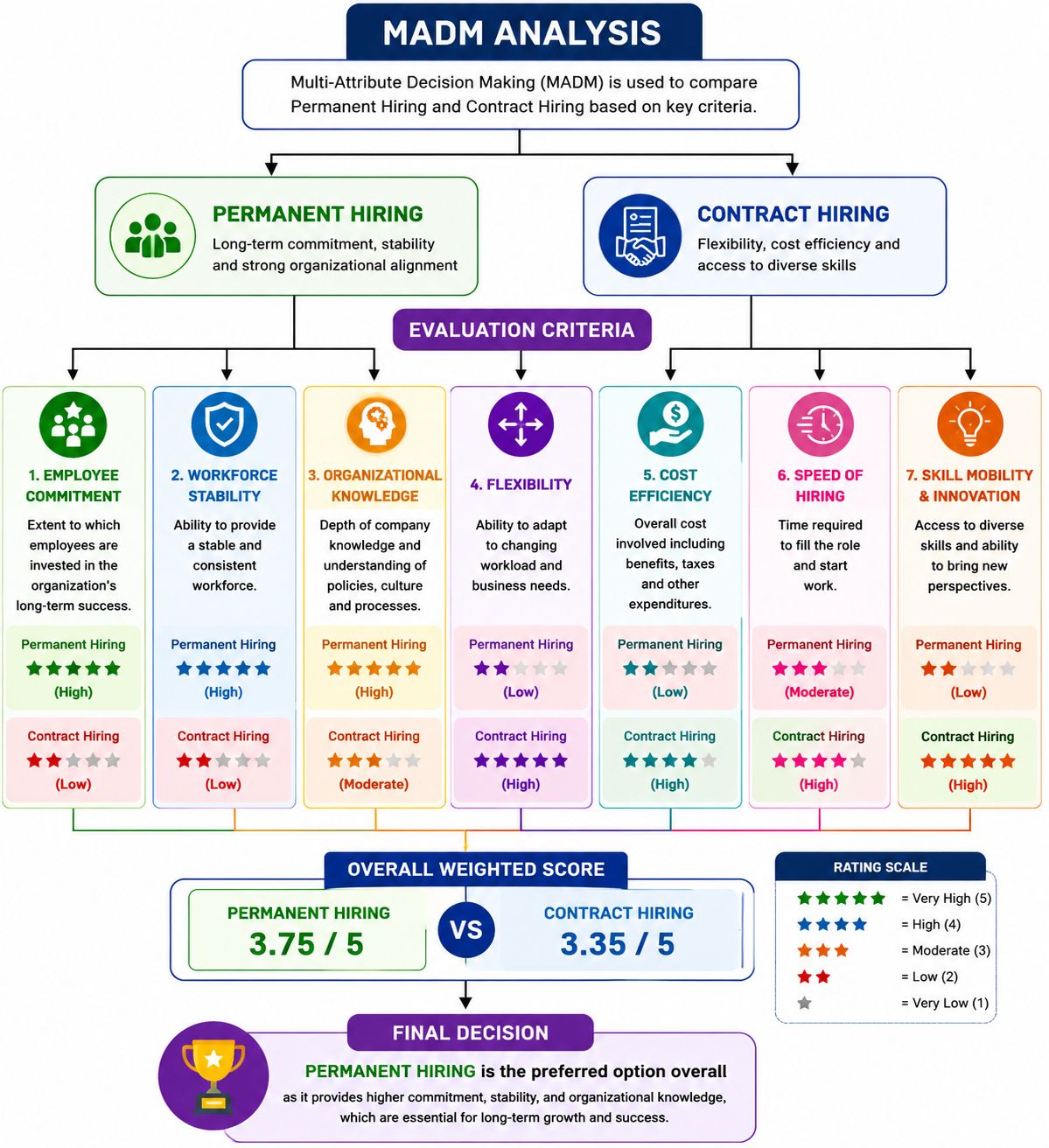
Source: Talent Gait
Which is better: a contract or a permanent hire?
With an evolving world, it is important to evolve yourself to maintain the balance with the trend. That exactly goes with contract and permanent hiring; people are confused about their hiring method and which will align with their business. It is difficult to determine which type of hiring is best, but this report will discuss points that help identify the most suitable hiring option for the business.
- Permanent hiring refers to hiring for a long period, whereas contractual hiring refers to hiring for a short period.
- The cost of permanent hiring is much higher than that of contract hiring because it entails many additional costs and financial commitments.
- Organisations invest in permanent hiring because it brings loyalty and consistency, whereas contractual employees demand flexibility.
- The other benefit of permanent hiring is that employees bring institutional knowledge and are committed to their work, which is not possible for contract workers. The budget for permanent hiring is much higher than for contractual hiring. (Global Partner Solutions)
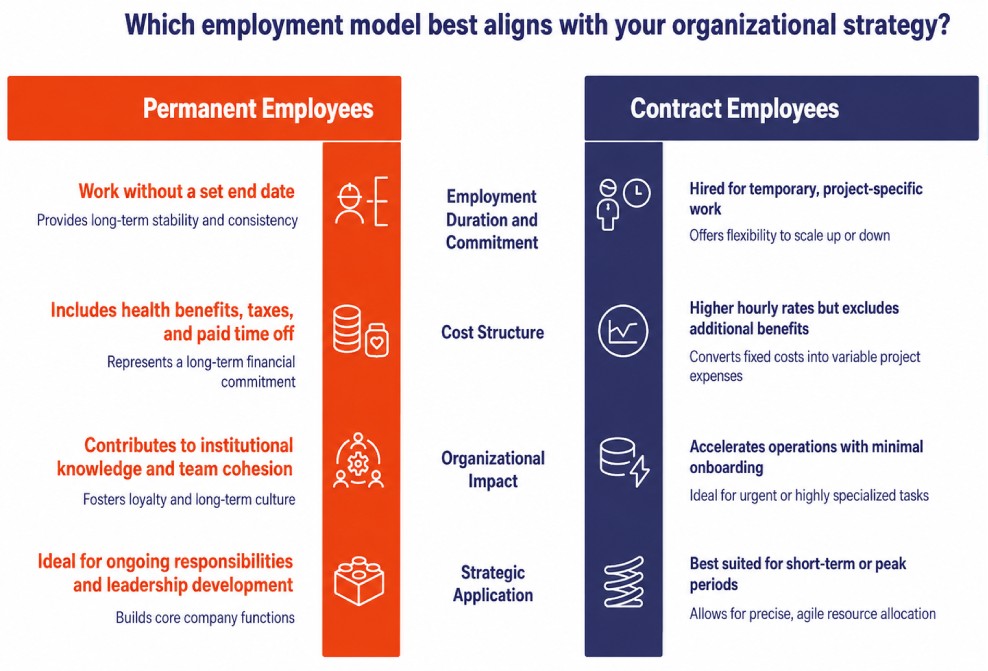
Source: Talent Gait and (Global Partner Solutions)
Factors you should consider while hiring in Gen Z’s world
According to the World Economic Forum, Gen Zers are now more frustrated about the changing of traditional work because of the pandemic. The things that were given earlier to millennials, Gen X, and Boomers, like proper training, timely promotion, step-by-step growth, are now rejected for Gen Z. The work that was important earlier, like routine work, mentorship, and a predictable path, is now being replaced by flexible work, rapid technological change, and economic uncertainty. But, over the past four years, the job satisfaction rate has risen from 21% to 31%. They choose learning and visible progress over loyalty. This generation sees work as a transaction, not an emotion. This totally means they demand money for whatever work they did, whether it’s permanent or contractual.
Business perception is also changing; sometimes it demands permanent hiring, sometimes it needs contractual hiring. Permanent hiring is best for long-term work, but what if a business needs more workers for short-term delivery? There are times when, all of a sudden, there are many projects, and employers are not ready for them. In this time of uncertainty, contractual hiring plays a major role. It helps hiring committees and employers find the perfect fit who can deliver the best work in less time.
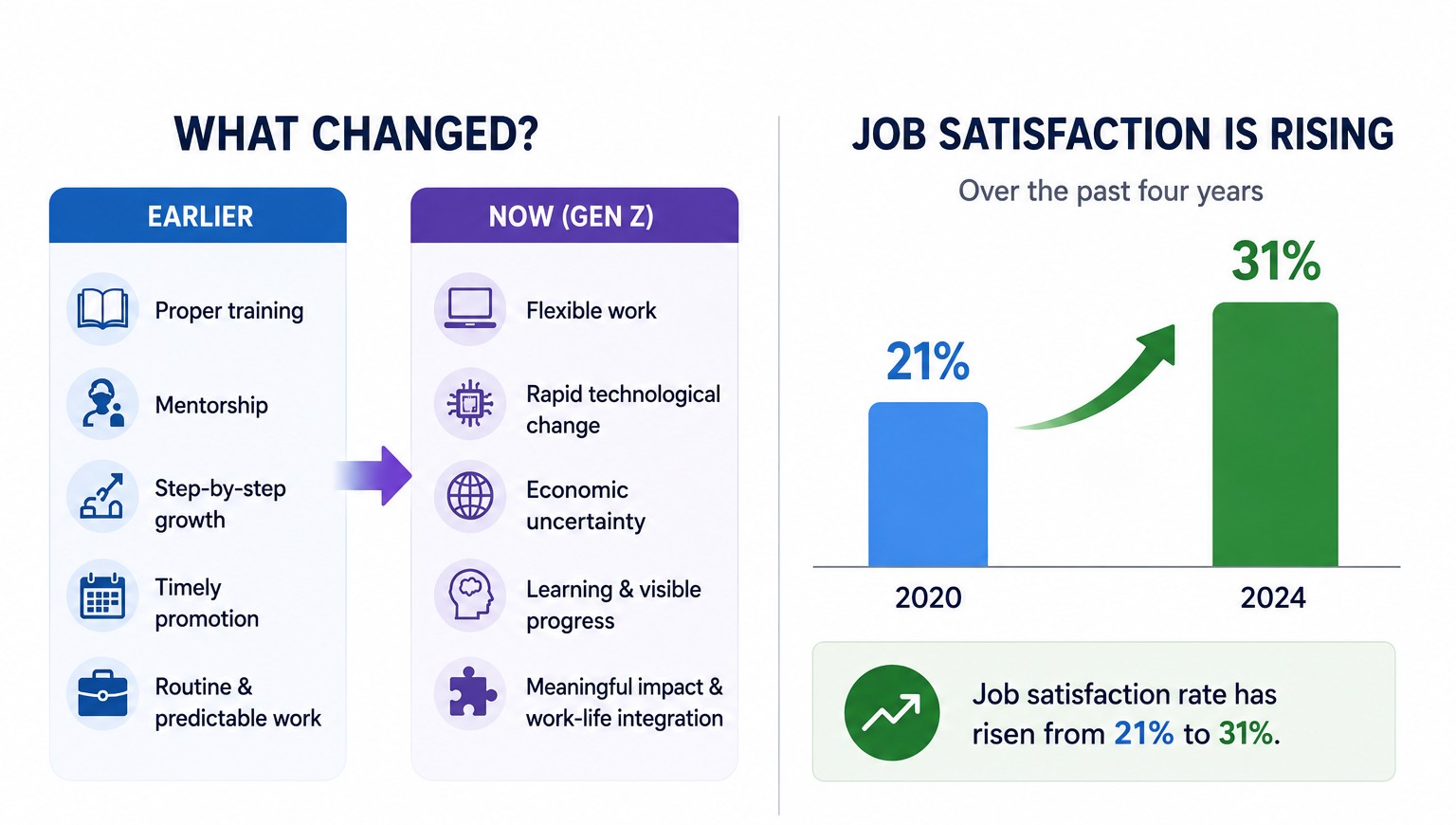
Source: Talent Gait, World Economic Forum
Financial Distribution between Contract Hiring and Permanent Hiring
According to Statista, the average turnover rate of contractual employees was 414%, which is 5% lower than the previous year. However, the average expenditure that employers spend on permanent staff is quite higher than that on contractual staff. The amount of benefits the company provides to its permanent employees drives more spending. The hiring costs for both methods are more or less the same. But spending after the hiring process increases with permanent employees, even if spending with contract hiring is limited in time. Thus, when deciding which hiring method is suitable for a particular organisation, it totally depends on their business needs, long-term goals, and financial situation.
Choosing the right hiring method for your business
Economic uncertainty, Geoeconomic fragmentation, Green transition, Technological Advancement, and Demographic shift are the major areas that will transform and shape the global labour market by 2030. Thus, businesses seeking long-term stability need permanent staff, retention, and adaptability over flexibility. However, contract hiring will help with short-term goals, budget constraints, and skill development for market shifts and short-term projects.
Permanent Hiring is formal and includes all benefits other than salary, while contract hiring is informal and does not provide long-term benefits. Thus, choosing the right hiring method depends entirely on business demands, labour costs, and organisational goals.