
Time to hire benchmark by role in 2026-27
Executive Summary
The recruiting industry has undergone a vast transformation over the past few years. Establishing a benchmark has become very important for businesses to remain relevant over the long term. The time-to-hire benchmark measures the total time a company takes to complete the hiring process relative to its industry goals or norms. It is important to understand the benchmark to stay competitive in the business market. Recent studies show that hiring speed has increased across many industries due to the adoption of AI, automated assessment, and various talent acquisition platforms.
This report will help with the current time-to-hire benchmark trend in the industry. It shows how hiring varies across industries, geographies, skills, technologies, and company sizes. It will also help you understand the average timing used worldwide and how these benchmarks can support a business’s growth by providing it with the best skills and knowledge.
Key Aspects
- The time-to-hire benchmark helps a company accelerate its recruitment speed to stay competitive in the business market.
- AI, when built with greater responsibility, can deliver better results than humans. AI has the potential to make hiring benchmarking faster
- More than 90% of policymakers are using AI in their hiring process
- On average, 88% of organizations use AI for initial screening. Implementing this help company to to reduce 86.74% of the total hiring cost compared to the hiring method
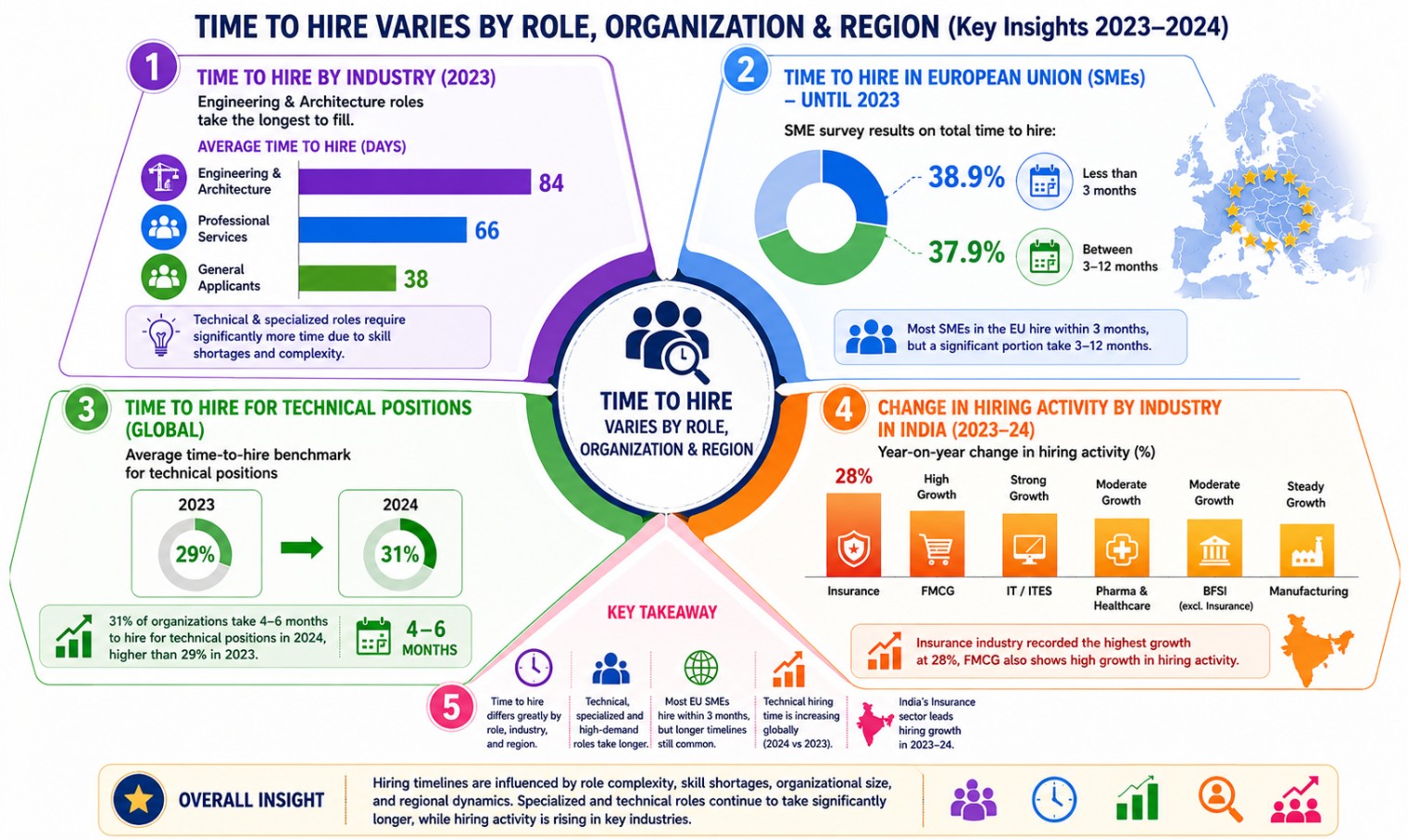
- The average time to hire for a standard position at a professional services firm fluctuated between 60 and 66 days from 2014 to 2023.
- In the United States, the same time-to-hire benchmark is 68 days in 2023 for the overall process for a standard position at a professional services company.
- For a good position in the engineering and architecture industries, it is almost 84 days in 2023.
- Until 2023, in the European Union, according to a 38.9% SME survey, the total time to hire for small and medium-sized enterprises was less than three months. While 37.9% of surveys say the average time the hiring process takes is between 3 and 12 months.
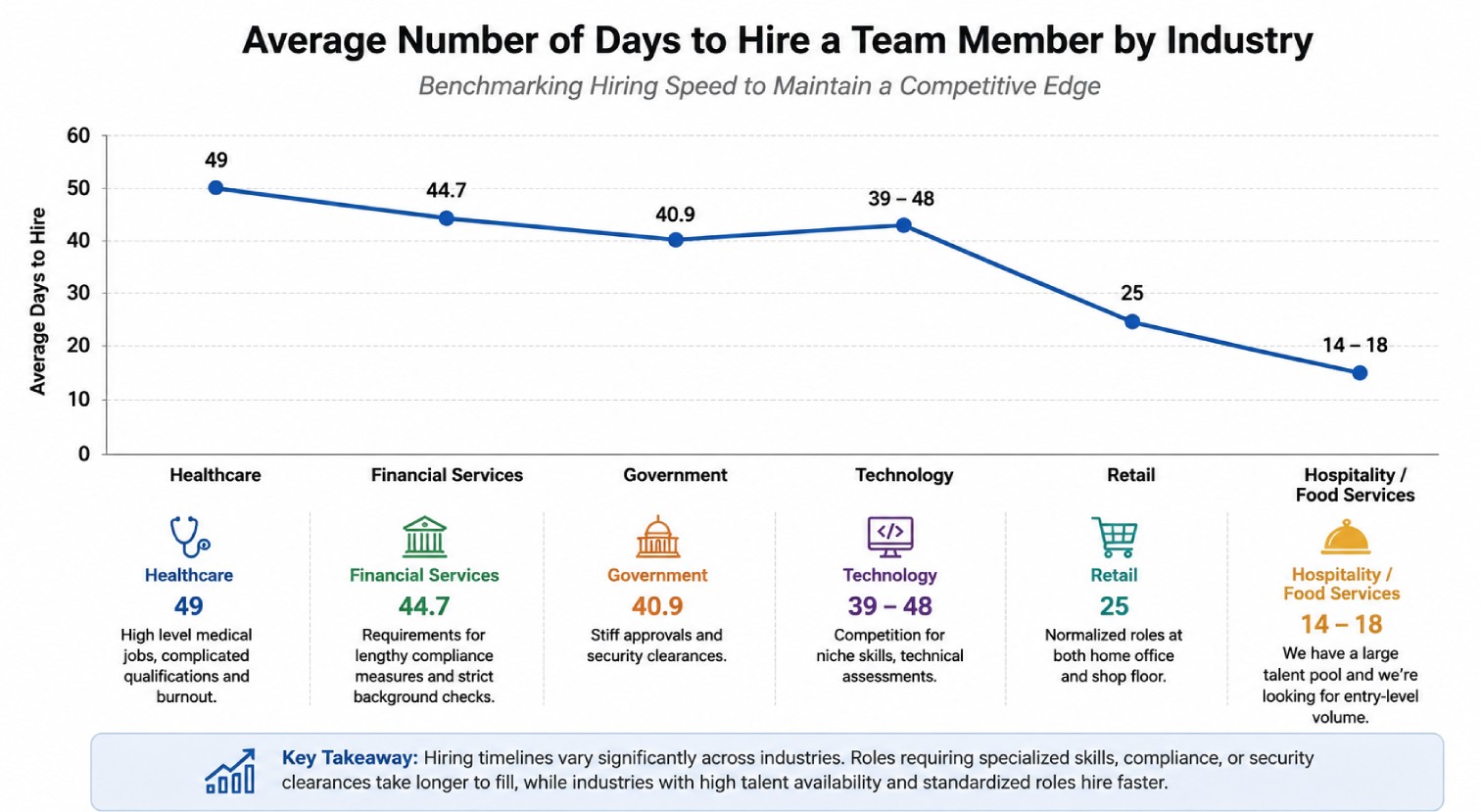
- Healthcare, financial services, government, and technology are more challenging, whereas retail and hospitality enjoy more extensive talent pools and quicker hiring cycles.
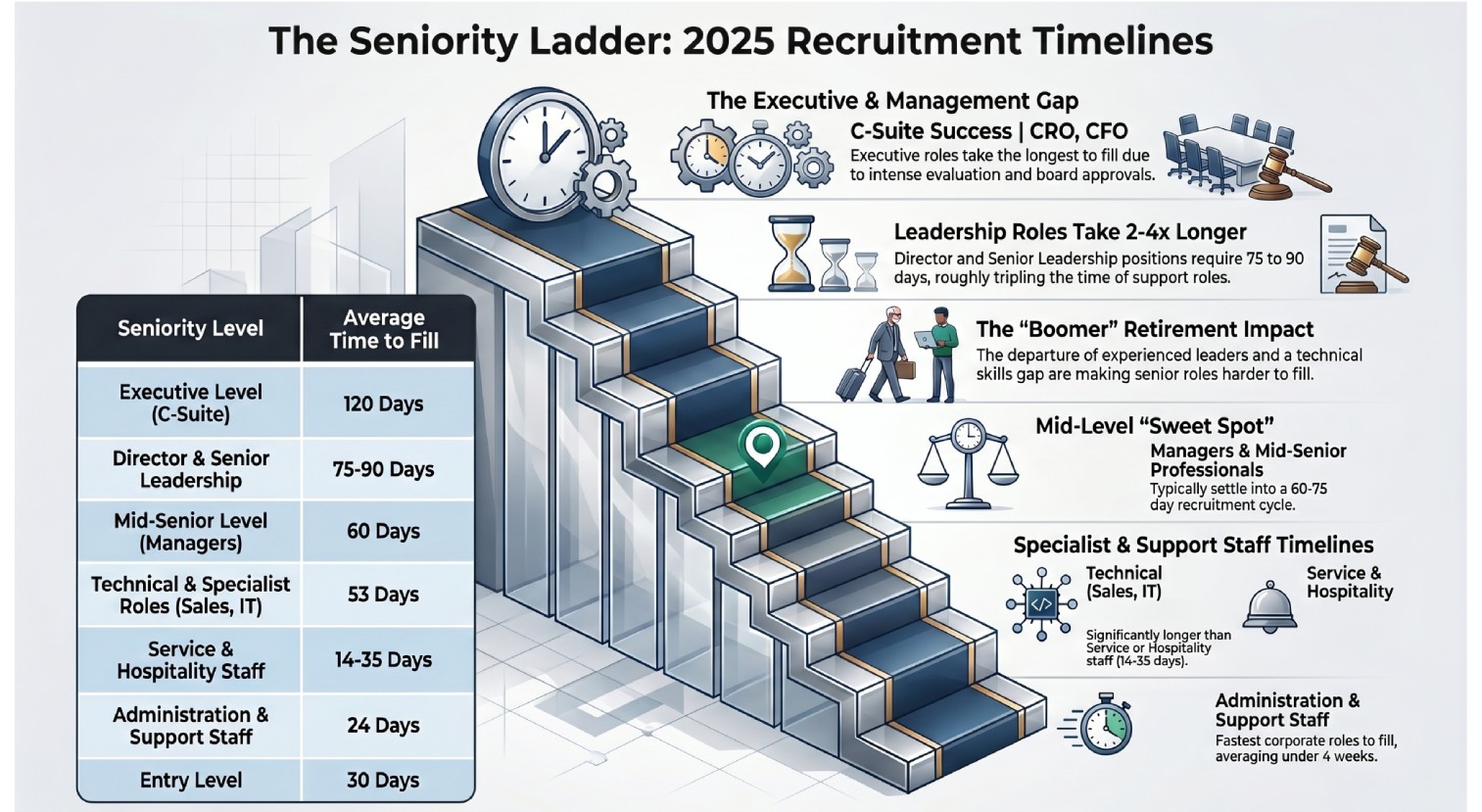
- Management, technical, and executive positions have much longer hiring timelines due to their limited talent availability, evaluation to become a leader, and less time to hire them because they’re typically the first to go unfilled.
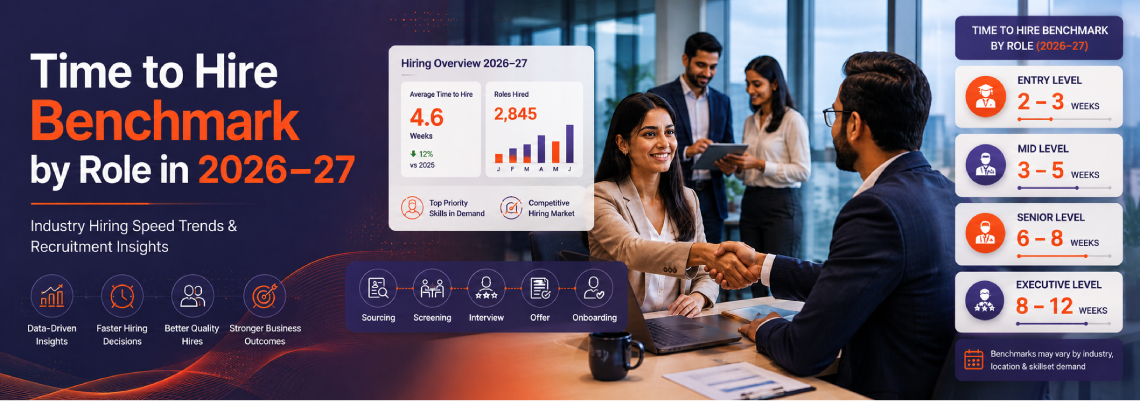
Table Of Content
- Why do employers implement the time-to-hire benchmark in their Organization?
- How AI is changing the hiring process
- Global Time- to- Hire Trend
- Comparative Industry Analysis (Global Benchmarks)
- The Seniority Gradient: Scaling the Recruitment Timeline
- Strategies to improve time to hire benchmake in the future
- Establish a clear hiring method
- Reduce Interview Process
- Maintain Candidate Record
- Utilize Technology
- Track Recruitment Metrics
- Conclusion
Why do employers implement the time-to-hire benchmark in their Organization?
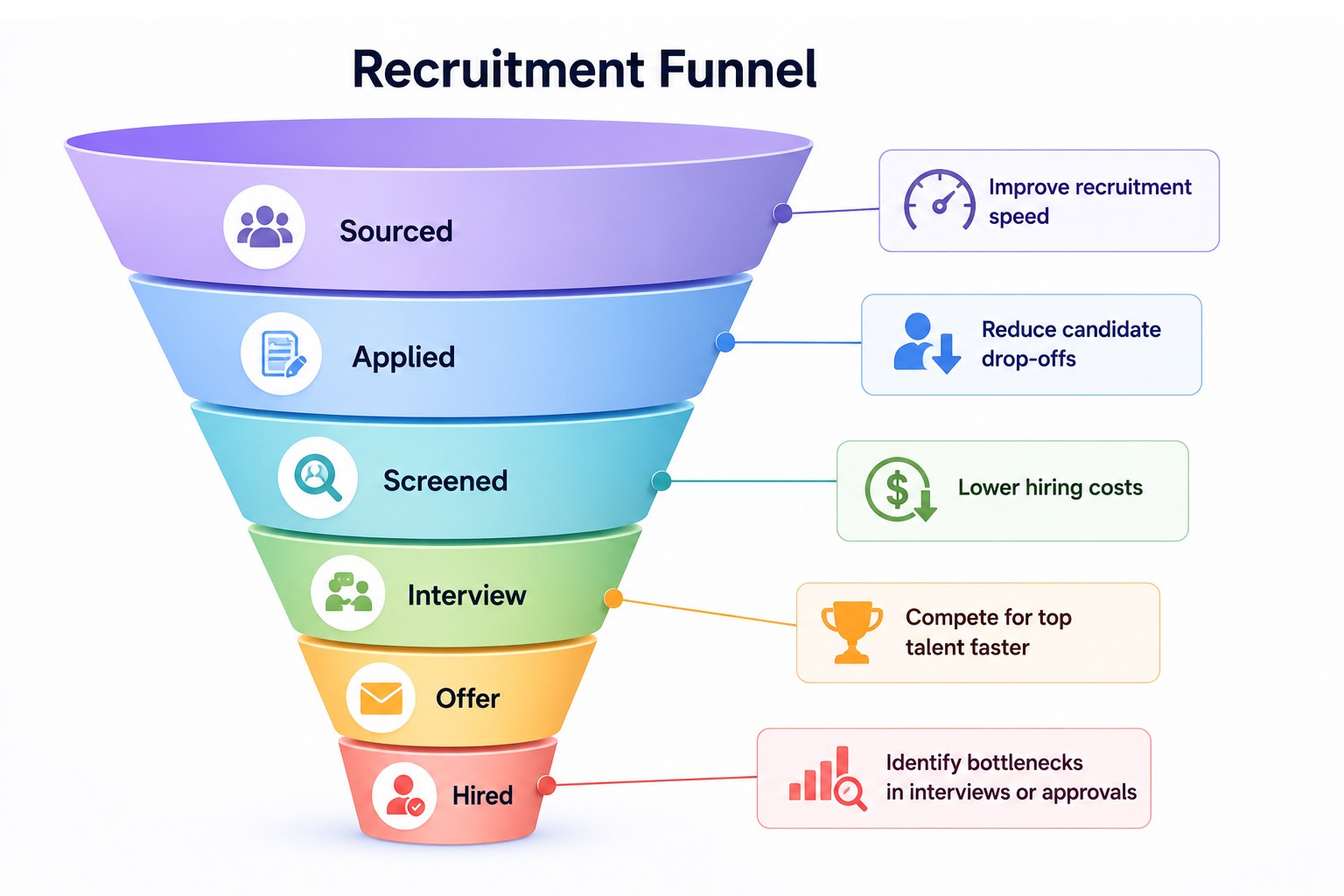
The time-to-hire benchmark helps companies stay competitive in the business market. Some of the reasons companies track these metrics are:
- Improve Recruitment Speed : The benchmark helps the hiring team accelerate recruitment by providing data on the time taken at each stage of the hiring process. A good sourcing strategy will boost the number and quality of potential candidates and speed up the recruitment process.
- Reduced Candidate Drop-Off : It decreases candidate drop-off and improves the number of qualified job seekers applying.
- Lower hiring costs : Good screening rejects unqualified candidates early, saving time and money in the hiring process.
- Compete for top talent faster : Organizations with a streamlined hiring process can attract the best talent and make better hires quicker.
- Identify bottlenecks in interviews or approvals : Monitoring the results of hiring efforts can reveal bottlenecks in your recruitment process, provide insights into how to optimize it to boost future hiring success, and more.
How AI is changing the hiring process
Artificial Intelligence is taking place in every sector. It also dominated the hiring industry. Employers now use resume filters, automated assessments, and AI interviews before having a human-level interview. Many job seekers suggest that AI provides more transparency and constructive feedback. AI hiring is not built to replace humans but to improve human efficiency and make everything more effective. AI, when built with greater responsibility, can deliver better results than humans. AI has the potential to make hiring benchmarking faster (AI-Powered Recruitment).
More than 90% of people hire through Artificial Intelligence and filter job applications (Hiring Human Touch Recruitment). On average, 88% of organizations use AI for initial screening. Implementing this reduces total hiring costs by 86.74% compared to the previous hiring method. AI also helps reduce the time required to hire and find suitable candidates by minimizing the total time spent on initial screening and guiding them towards the final stage. This helps reduce time and costs and accelerates the fair process for promising candidates.
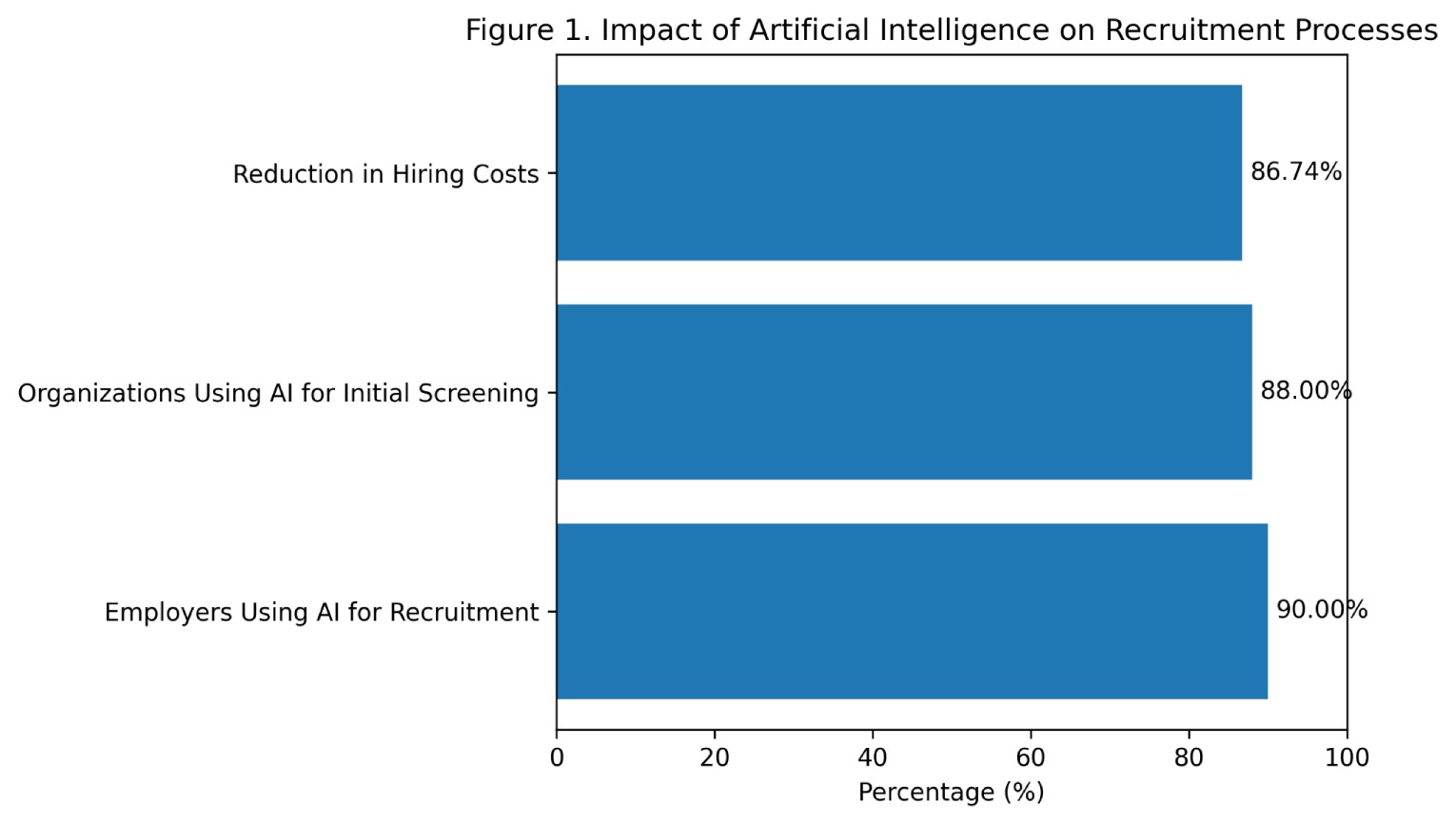
Source: Talent Gait, (Hiring Human Touch Recruitment)
Global Time- to- Hire Trend
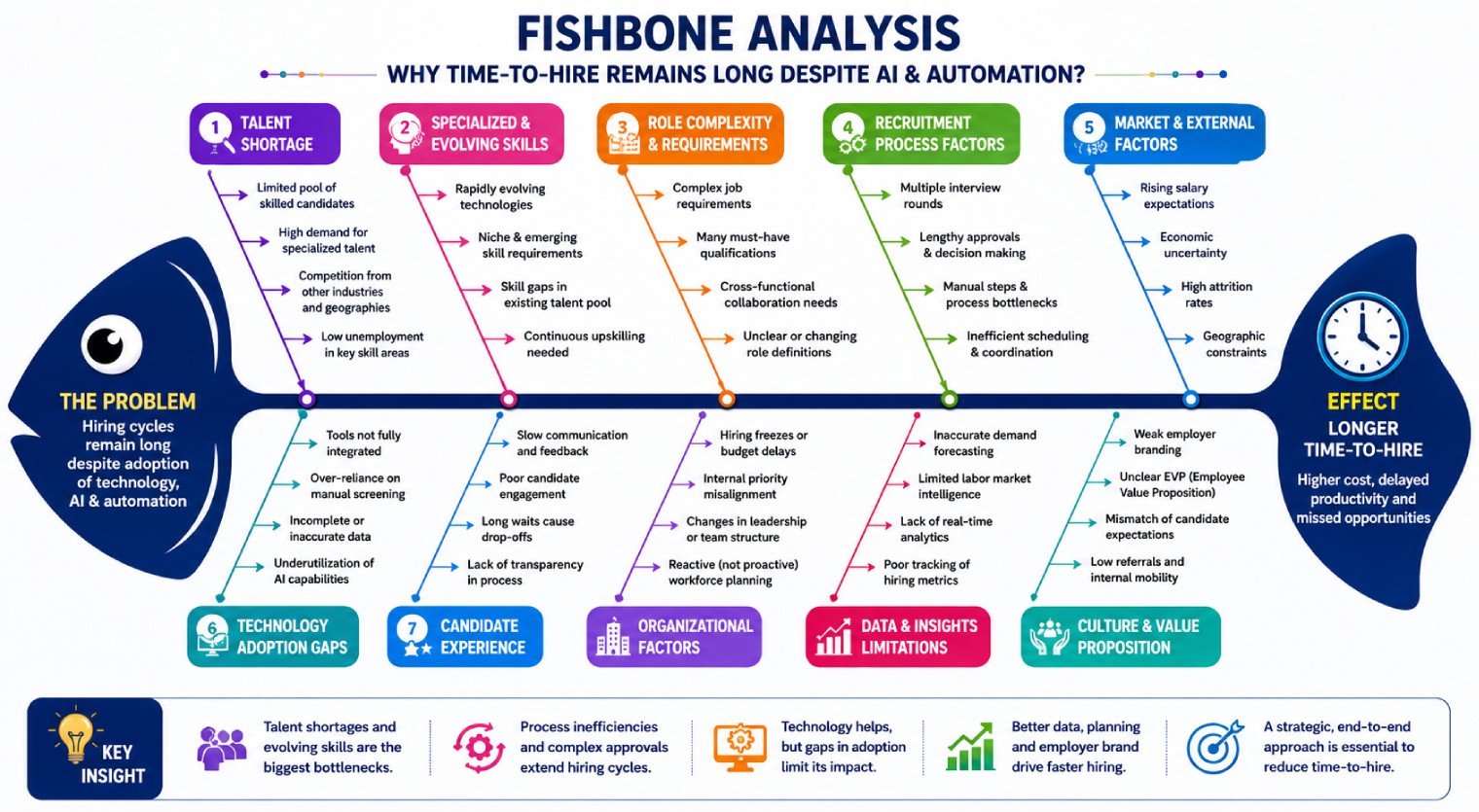
New technologies, automation, and AI are used across sectors for hiring, but they are not making recruiting any faster or easier. According to the Statista Global recruitment data report, the average time to hire for a standard position at a professional services firm fluctuated between 60 and 66 days from 2014 to 2023. Whereas the time-to-hire for job applicants from 2015 to 2018 was 38 days (Average time to hire). After adopting modern technology, the organization still experiences a slower recruitment process due to a shortage of skilled, suitable candidates and the evolving technology required for particular roles. However, in the United States, the same time-to-hire benchmark is 68 days in 2023 for the overall process for a standard position at a professional services company (Statista America Hiring Data).
The time to hire varies by role and organization. For a good position in the engineering and architecture industries, it is almost 84 days in 2023 (Statista Industry Segment). Whereas, until 2023, in the European Union, according to a 38.9% SME survey, the total time to hire for small and medium-sized enterprises was less than three months. While 37.9% of surveys say the average time the hiring process takes is between 3 and 12 months (Hiring in SME’s in the EU).
For a technical position in 2024, the average time-to-hire benchmark is four to six months for 31% of organizations, higher than in 2023 (29%) (Global Tech Hiring). The changes in hiring activity in India’s insurance industry in 2023-24 have shown the highest growth, at 28%. FMCG industries also experienced the highest growth in hiring activity over the last year (India change in hiring by industries).
Comparative Industry Analysis (Global Benchmarks)
For the sake of keeping a competitive edge, industrial leaders need to compare their performance to the average of their peers in other sectors, where the skills may be transferable. Specialized skills and compliance regulations make recruiting in industries such as healthcare, financial services, government, and technology more challenging, whereas retail and hospitality enjoy more extensive talent pools and quicker hiring cycles. By knowing these industry standards, companies can establish realistic hiring targets, optimize their workforce planning, and stay competitive when it comes to attracting employees.
The Seniority Gradient: Scaling the Recruitment Timeline
Recruitment timelines are longer the higher up in an organization. The hiring process is typically longer for management, technical and executive roles – often taking months to hire, depending on the skills that are required and available to hire – and these roles are typically the first to go unfilled. Management, technical and executive positions have much longer hiring timelines due to their limited talent availability, evaluation to become a leader and less time to hire them because they’re typically the first to go unfilled. To maximize recruitment efficiency and talent acquisition results, organizations should consider their workforce plans for 2026–27 and make sure to match hiring benchmarks with the specific roles.
Strategies to improve time to hire benchmake in the future
To streamline the hiring process and reduce overall hiring time while maintaining quality in 2026-27, companies and policymakers need to implement certain strategies.
Establish a clear hiring method
Analyzing the types of skills and knowledge an employer is looking for before posting the vacancy is very important. Keeping a particular criterion for each role makes the hiring process easy.
Reduce Interview Process
Till now, interviews have been 4 to 5-round processes, and to get a job, a candidate has to pass each round. But implementing only the necessary round of interviews can help reduce the number of interview stages, and avoiding lengthy assignments can help shorten the hiring cycle.
Maintain Candidate Record
Maintaining a prior database of eligible candidates can help to reduce the hiring time. For this, employers can select and separate candidates for each role when no vacancies are available, so that at the time of need, they can use the database and make hiring easy.
Utilize Technology
Technology such as Applicant tracking systems (ATS), automated screening platforms, and AI-powered screening tools can remove burdens from the hiring team and improve efficiency.
Track Recruitment Metrics
If the company tracks the total time taken for each stage, such as acceptance rate, source effectiveness, and quality of hire will help to track recruitment metrics.
Conclusion
The job market becomes more competitive, organizations have come to pay closer attention to their time-to-hire metrics. With the ongoing shortage of qualified candidates, changing skill demands, and increased rivalry in the hiring landscape, it is no longer a luxury to measure and optimize hiring speed but a strategic imperative. The results of this report indicate that although the introduction of new technologies such as Artificial Intelligence, Applicant Tracking Systems (ATS), and automated evaluations has greatly boosted recruitment efficiency, hiring timelines remain inconsistent across industries, regions, company sizes, and job roles.
The rise of AI in recruitment solutions has revolutionized the recruiting industry and improved the recruitment process in many ways, such as reducing manual work, minimizing recruiting expenses, and speeding up candidate screening. AI is being increasingly used by firms around the world for several reasons: to hire the right person, make better decisions, and to boost the overall candidate journey. But technology isn’t a complete solution, though. Skill shortages, time-consuming hiring procedures, and the level of competition in the job market remain a factor in time to hire benchmarks by industry.
In the years to come (2026-27), organizations with clear hiring criteria, simple recruitment workflows, talent pipelines, advanced recruitment technologies, and monitoring of hiring metrics will have a better chance of attracting and securing top talent. The key to both the speed of hire and the quality of candidates will require a balance between technological advances and human decision-making.
In conclusion, the time-to-hire metric is not just a number; it’s a sign of the organization’s agility and talent acquisition success. Companies that successfully optimize their hiring processes will secure skilled personnel sooner, reduce recruitment expenses, increase workforce productivity, and provide the support necessary for sustainable business growth.