
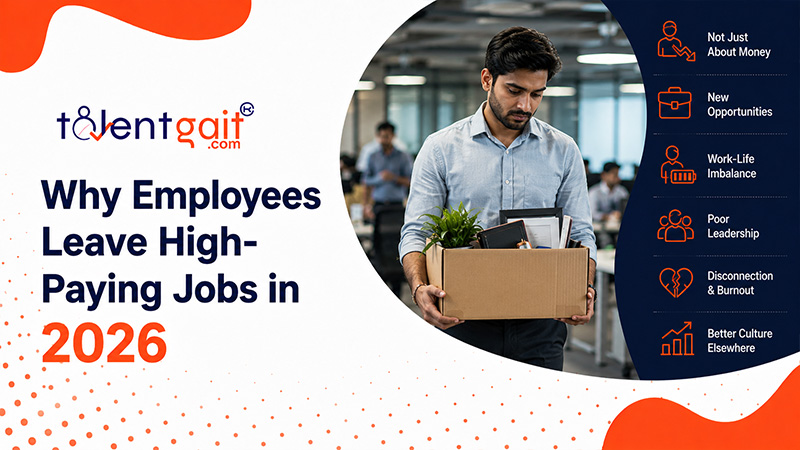
A fat pay cheque used to be enough. It isn’t anymore. Across industries in 2026, professionals are walking away from high-paying roles — not because they got a better offer, but because the job stopped making sense. The problem isn’t compensation. It’s everything around it. Burnout, poor leadership, zero growth, rigid office mandates, and a workplace that treats people like output machines. Money masks these problems for a while. Then it doesn’t.
When a Good Salary Stops Being Enough
Pay buys time. It doesn’t buy loyalty.
Employees in 2026 are leaving well-compensated roles when the rest of the picture is broken. A Gartner survey found 62% of managers reported higher workloads in 2025 due to hiring freezes — and that pressure flows straight down to their teams. Burnout is real and it compounds fast.
Rigid return-to-office mandates are pushing people out too. One in four workers who left their jobs in 2025 cited RTO policies as a factor. For working parents, caregivers, and those managing health concerns, inflexible schedules aren’t just inconvenient — they’re unsustainable.
Weak managers make everything worse. When leadership is absent, dismissive, or micromanaging, high performers don’t wait around. They leave. Recognition gaps, stalled promotions, and being forced to use AI tools without any real training add layers to an already fragile situation. Salary sits at the top of a person’s bank statement, not at the top of their list of reasons to stay.
Growth Has Become a Non-Negotiable
Career stagnation is now one of the top drivers of voluntary exits. McKinsey data shows that career development was the leading reason for departures during the Great Reshuffle — and that hasn’t changed in 2026.
Employees want clear paths forward, not vague annual review conversations. They want upskilling in AI, leadership, and data. If an organisation can’t show someone where they’re headed, someone else will. Internal mobility and targeted learning aren’t perks — they’re retention tools.
The Signals Employees Read Before They Quit
Most exits don’t come without warning. Employees disengage long before they resign.
Here are five clear signals that precede a resignation:
- Feedback goes nowhere – employees raise concerns repeatedly and see no action taken
- Growth stops – no new projects, no promotions, no honest conversations about the future
- AI is forced, not supported – tools are mandated without training or transparency
- Flexibility disappears – hybrid arrangements are pulled back with no room for discussion
- Values feel misaligned – the company’s actions don’t match what it publicly claims to stand for
When employees see these signals, they’ve often already started looking.
Reasons the Workplace Itself Pushes People Out
Here are the following reasons the workplace itself pushes people out:
Poor Leadership Destroys Trust Fast
Bad managers don’t shout or act dramatically — they ignore, block, and dismiss. Management-related turnover hit a six-year high in 2025. Employees don’t quit companies on paper. They quit the experience of working under someone who doesn’t see them.
Forced AI Adoption Without Support
72% of workers felt forced to use AI without adequate training in 2025. That breeds anxiety, not productivity.” Employees become disengaged when they are surveilled instead of supported. AI is something that happens when it’s rolled out clearly and trained—not imposed from the top.
Return-to-Office Without Context
Blanket RTO mandates feel punitive when employees have proven they can perform remotely. Organisations that pull flexibility without explanation or purpose signal distrust. That signal lands clearly — and many people act on it.
Healthcare and Family Pressure
Healthcare costs rose 7% in 2025. Childcare expenses crossed ₹15,000 annually in many regions. When employees can’t afford to stay healthy or keep their family stable, a salary increase doesn’t solve the problem. Benefits gaps drive quiet exits.
Values That Don’t Match Reality
Employees — especially younger ones — watch what companies do, not what they say. A disconnect between stated values and actual behaviour breaks trust quickly and permanently.
Manager Overload Trickles Down
Squeezed managers can’t support their teams well. When managers are overwhelmed, coaching stops, feedback disappears, and employees feel invisible. That invisibility is expensive.
Conclusion
High pay gets people in the door. It doesn’t keep them. In 2026, retention comes down to whether a workplace offers growth, honest leadership, flexibility, and respect. Organisations that treat those as optional extras will keep losing good people to ones that don’t.