
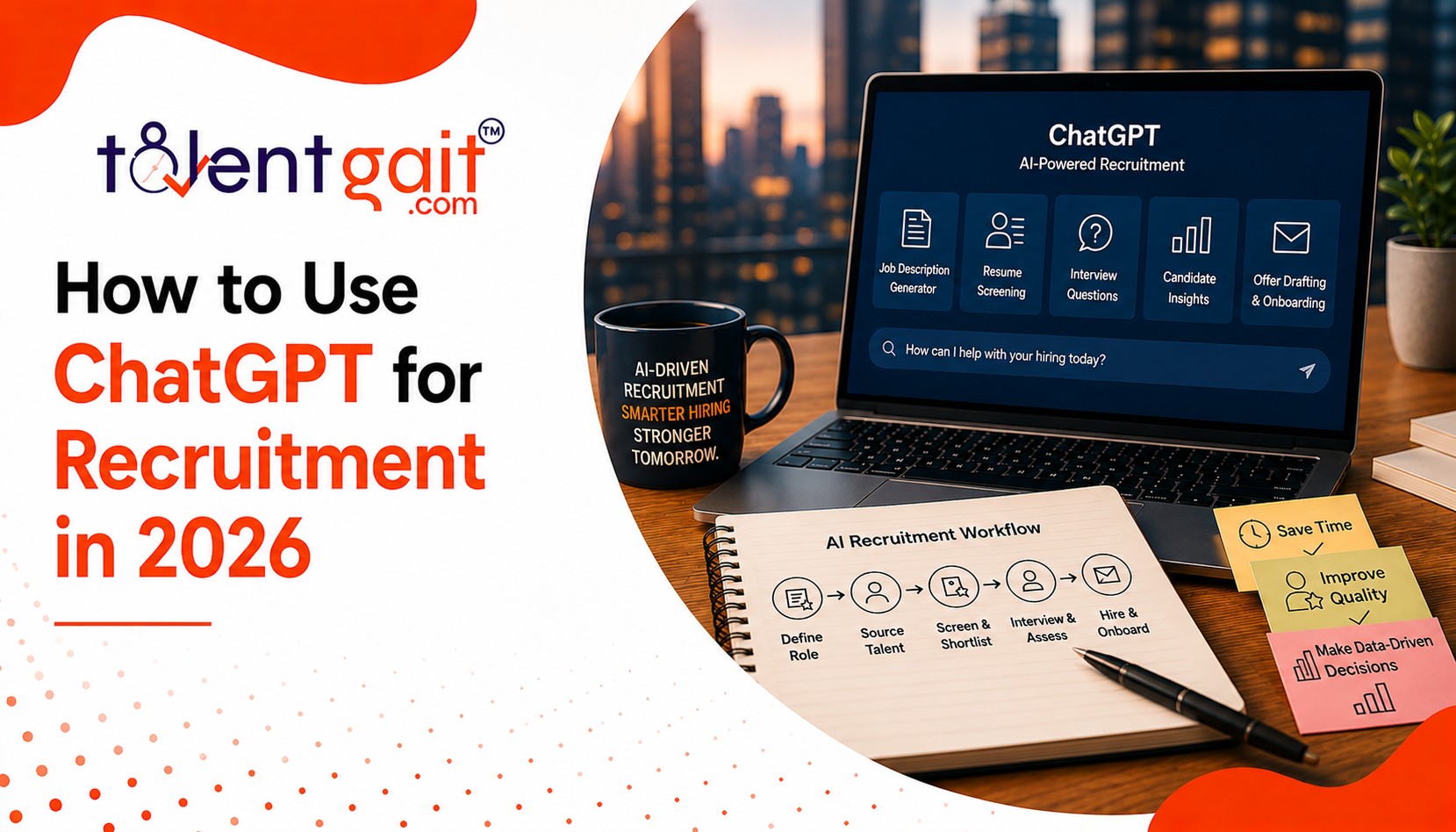
Recruitment moves fast, and time is the one thing most hiring teams never have enough of. ChatGPT has become a genuine working tool for recruiters — not a gimmick, but a practical assistant that handles the writing-heavy parts of the job. This post covers exactly how to use it well, where it adds real value, and what you should always keep in human hands.
ChatGPT Is Now a Standard Part of the Hiring Toolkit
A few years ago, recruiters were testing ChatGPT out of curiosity. Now it’s a fixture in daily hiring workflows. According to SHRM’s 2025 Talent Trends report, 69% of HR professionals use AI to support recruiting. That number keeps rising. The shift happened because the tool actually solves a real problem — blank-page paralysis. Recruiters spend hours writing job adverts, outreach emails, and interview questions. ChatGPT cuts that time down significantly, often producing a solid first draft in under a minute. The teams seeing results aren’t using it to replace judgement. They’re using it to remove the slow, repetitive writing work so they can focus on decisions that actually require a person.
What ChatGPT Can and Can’t Do in Recruitment
Here’s the honest picture. ChatGPT generates text. It doesn’t search databases, access your ATS, or send emails on your behalf. It has no memory between sessions and no access to your candidate pipeline. Every conversation starts fresh. That’s the limitation you need to work around. The value is real, but it’s specific — it lives in the content and communication layer of your hiring process, not in sourcing or scheduling.
Writing Job Adverts
ChatGPT produces clear, well-structured job adverts quickly. Give it the role title, key responsibilities, required skills, and your company tone. It returns a draft in seconds. You still need to review for accuracy, check for unintentionally exclusionary language, and add your employer brand voice before posting anywhere.
Drafting Candidate Outreach Messages
Every time, a personalised outreach beats a generic template. ChatGPT can assist you in crafting messages that sound thoughtful and human, not robotic. Give it the candidate’s background, the role you’re hiring for and the hook you wish to use. Before sending: Customize the output — AI penned messages are easy to tell apart in 2026.
Building Interview Question Banks
Writing structured interview questions for every new role from scratch is slow. ChatGPT generates role-specific behavioural and situational questions fast. Specify the competencies you’re assessing and the seniority level. Review each question before use — the tool sometimes produces generic phrasing that won’t tell you much about a candidate.
Supporting Initial CV Screening
When application volume is high, ChatGPT can summarise CVs and flag relevant strengths or gaps against a job description. Paste in anonymised text and ask for a structured summary. This is a triage tool, not a decision-making one. A human must review every candidate before any shortlisting decision is made.
Researching Role Benchmarks and Market Context
Before writing a job advert or setting a salary range, ChatGPT can give you a useful overview of typical skills, titles, and compensation for a given role and sector. It’s a fast starting point, not a replacement for dedicated benchmarking tools. Verify anything factual before you use it externally.
The Risks You Need to Manage
ChatGPT hallucinates — it produces confident, plausible-sounding content that is sometimes factually wrong. It also reflects biases present in its training data. Used without oversight, it can quietly reproduce exclusionary language in job adverts or generate inaccurate role information.
- Never paste personally identifiable candidate information into free or standard ChatGPT plans — there’s no data processing agreement in place
- Always review AI-generated content before it reaches a candidate or hiring manager
- Treat every output as a first draft, not a finished product
- Check AI-written job adverts for biased or unnecessarily restrictive language before publishing
- Keep a record of how ChatGPT is used in your process, especially if you hire across EU jurisdictions
ChatGPT saves time on writing. It doesn’t replace the judgement, relationships, or decisions that define strong recruitment work.
Conclusion
ChatGPT is a practical tool when used for what it’s actually good at — writing. Use it to draft, not to decide. Keep humans in charge of every call that matters, and it’ll earn its place in your hiring process.