
Description
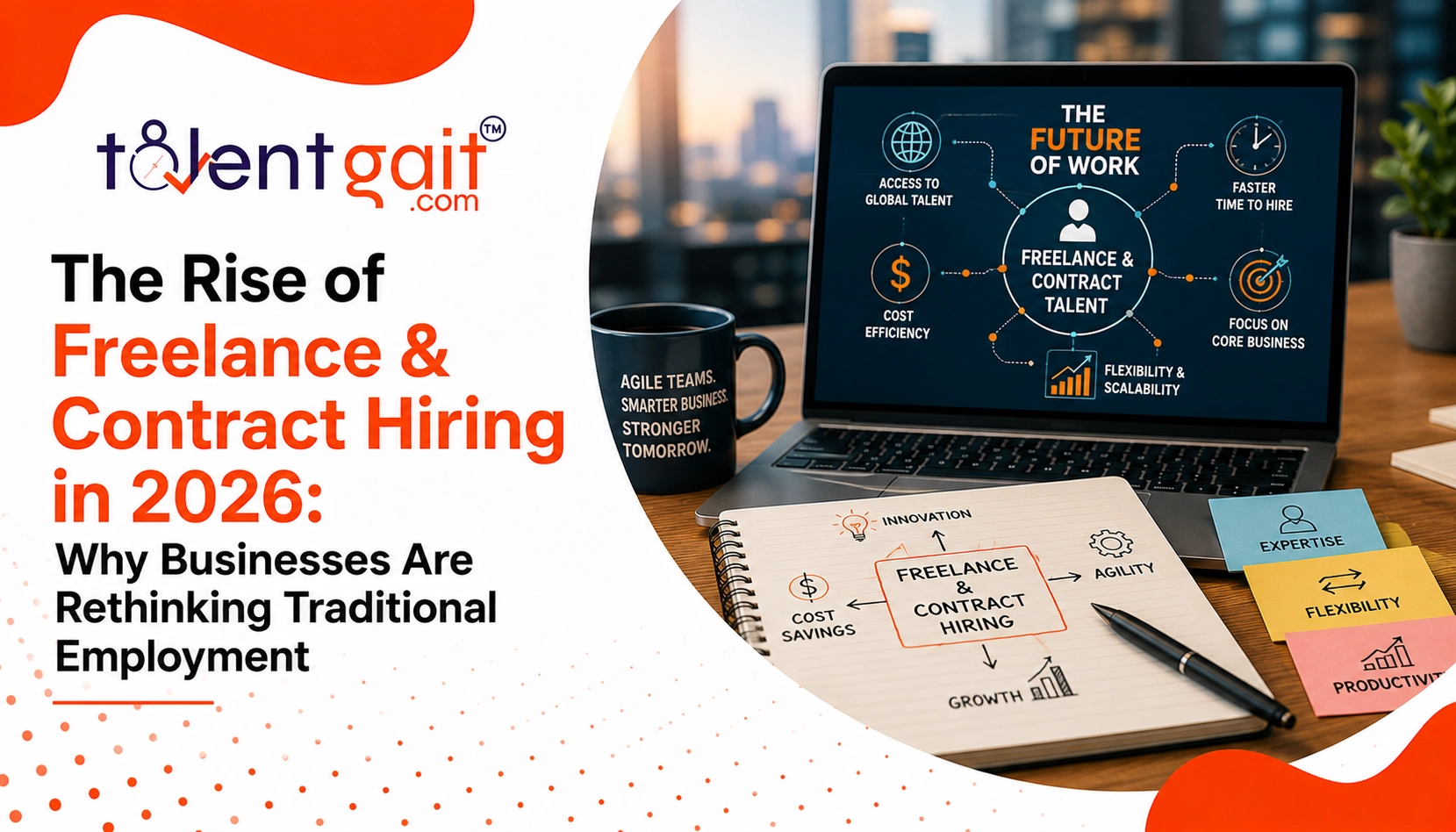
Gain insight into the growing trend of freelance and contract hiring in 2026. Discover how companies are adapting their workforces to be more flexible, how AI is transforming their hiring processes, and how to leverage niche talent to remain competitive in the future of work.
Introduction
The hiring process of companies is evolving at a rapid pace. The prevailing paradigm for workforce development for decades has been “full-time work. But these days, companies in all sectors are embracing flexible approaches to their talent demands, with the increasing adoption of freelance talent, independent contractors, project talent and flexible talent solutions.
Artificial intelligence, remote working, economic uncertainty and fast-changing skill needs have brought about a new employment environment where flexibility often outweighs the concept of permanent employment. Freelance and contract hiring is no longer considered a stopgap measure, but a business advantage in 2026.
Whether a small business or a large corporation, organizations are turning to the staffing model of using specialized experts to cut costs and to be more responsive to market changes. Meanwhile, millions of pros are moving toward freelancing due to the benefits of freedom, flexibility and income.
Understanding Freelance and Contract Hiring
Freelance hiring is a method of hiring independent workers that are hired for a specific assignment or project, or for a fixed duration of time.
Contract hiring is a practice of attracting specialists for a period of time or a specific project, typically done via staffing agencies, recruitment companies, or directly through contracts.
Typical freelance or contract jobs are:
- Software Developers
- Data Analysts
- Digital Marketing Specialists
- Content Writers
- Graphic Designers
- Cybersecurity Experts
- Financial Consultants
- HR Professionals
- Recruitment Specialists
- Project Managers
- AI and Machine Learning Engineers
Freelancers and contractors, as opposed to regular staff, are typically contracted to fill in a particular gap in the business, to finish a project or deliver a certain expertise that isn’t necessarily needed full-time.
Why Freelance Hiring Is Growing So Rapidly in 2026
A number of strong reasons for the rise in freelance and contract work globally are in play.
1. The Demand for Specialized Skills
Technologies are changing so rapidly.
All of a sudden, a lot of organizations require knowledge about the following:
- Artificial Intelligence
- Machine Learning
- Data Science
- Cloud Computing
- Cybersecurity
- Automation
- Blockchain
- Digital Transformation
It can be costly and impractical to have a full-time employee for each new skill.
Rather, companies are becoming increasingly reliant on freelance experts who are already equipped with these skills.
The World Economic Forum Future of Jobs Report indicates that the demand for technical and digital skills remains high, with employers continuing to struggle with talent shortages, highlighting the need for flexible approaches to securing talent.
2. Cost Efficiency for Businesses
The greatest benefit of contract hiring is that it provides financial flexibility.
Permanent workers are likely to need:
- Fixed salaries
- Bonuses
- Insurance benefits
- Retirement contributions
- Paid leave
- Office infrastructure
- Training investments
Freelancers and Contractors are hired only when necessary.
- Control labor costs
- Improve budget efficiency
- Scale teams up and down in a matter of seconds
- Minimize long term financial obligations
This can be very useful for startups and expanding businesses.
3. The Continued Expansion of Remote Work
The way work got done in the past was altered forever.
No longer do companies have to hire people from their own locale.
In India today, a company can hire:
- A designer from Europe
- South America’s developer
- A consultant from the United States or Canada.
- A Marketing expert from Southeast Asia
This worldwide talent platform has revolutionized the chances for freelance workers.
Organizations that adopt remote and distributed workforces benefit from access to more talent and expertise, per reports from McKinsey Global Institute.
4. Faster Hiring and Greater Agility
Typical hiring takes weeks or months.
Organizations often face:
- Multiple interview rounds
- Approval processes
- Salary negotiations
- Long onboarding periods
Contract hiring can significantly reduce this time period.
There are numerous companies that will hire qualified freelance writers in just a couple of days.
This is a significant advantage in competition when projects need to be pursued immediately.
How AI Is Accelerating Freelance Hiring
AI is increasingly an integral part of the independent talent connection process.
Today’s AI-driven recruiting software can:
- Match skills to job requirements
- Screen candidate profiles
- Analyze project experience
- Recommend suitable contractors
- Forecast the chances of a project being a success.
Employers can now reduce the time spent reviewing hundreds of applications, by quickly picking out professionals who have experience that closely matches the requirements of a project.
This has transformed freelance recruitment to be more efficient and scalable than ever before.
The Benefits of Freelance and Contract Hiring for Employers
Access to Top Talent
Organizations can hire specialists who are very specialized, who may not be looking for a full-time job.
This opens up the talent pool greatly.
Workforce Flexibility
Businesses can rapidly change their manpower requirements according to:
- Seasonal demand
- Project requirements
- Market conditions
- Business growth
This agility is increasingly valued in an unstable economic climate.
Faster Innovation
Outsourcing to external professionals frequently brings in:
- Fresh perspectives
- New methodologies
- Industry best practices
- Innovative solutions
To accelerate innovation efforts, many organizations engage freelance experts.
Reduced Time-to-Hire
It is quicker to move from recruitment to hiring than with the traditional method.
This enables companies to address some of the most critical skill gaps before they affect productivity or project delivery.
Professionals have reasons to opt for freelance work.
Employer demand isn’t the only reason for the surge of freelance hiring.
Flexible work options are in vogue among many professionals.
Greater Independence
Freelancers may have on their side:
- Working hours
- Project selection
- Career direction
- Client relationships
Evokes experienced professionals looking for flexibility.
Diverse Work Experience
Independent professionals often engage in various sectors and business settings.
This exposure provides them with the opportunity to:
- Develop broader expertise
- Expand professional networks
- Build versatile portfolios
Potential for Higher Earnings
Freelancers who have specialized expertise in certain areas like software development, AI consulting, cybersecurity, or digital marketing may be able to charge higher rates because of their niche knowledge.
The income of a contractor may vary, but skilled contractors often make more than a regular employee with comparable expertise.
Industries that are driving the Freelance Revolution.
Some industries are seeing significant increases in contract staffing overall.
Technology
Technology programmers routinely look for people who can:
- Developers
- Cloud Engineers
- AI Specialists
- Cybersecurity Experts
When it comes to models of engagement, project-based work flows naturally.
Marketing and Creative Services
Freelance talent is becoming more common in organizations for the following reasons:
- Content creation
- Branding
- SEO
- Graphic design
- Video production
- Social media management
This means that you can dip in and out of the specific creative skills without any long-term obligations.
Finance and Consulting
The need for financial analysts, auditors, compliance officers, and business consultants is growing by the day, with many working on contracts.
Human Resources and Recruitment
Challenges of Freelance and Contract Hiring
While flexible hiring models have their upside, they also have their downside.
Knowledge Retention
Contractors can exit the project when it is finished, only taking their valuable knowledge.
Proper documentation and knowledge transfer should be ensured by the organizations.
Team Integration
You might need to put in extra trouble to get temporary professionals on board with your company culture and processes.
It is still vital to have strong onboarding practices.
Compliance and legal considerations
The laws governing contractors vary between different countries and jurisdictions, impacting their classification and tax treatment, among other considerations.
However, businesses need to keep compliance when hiring independent contractors.
Quality Control
Not all freelancers are experts. Structured screening and skills assessment are still crucial to hiring success.
How Talent Gait Helps Organizations Build Flexible Workforces
With on-demand and contract hiring becoming essential to an organization’s recruiting strategy, there is a need for smarter hiring solutions to recruit the right talent.
Talent Gait has made a contribution to modern recruitment in the following ways:
- AI-driven candidate matching
- Skill-based hiring solutions
- Behavioral profiling
- Contract and project based sourcing of talent
- Talent pipeline development
- Recruitment process optimization
Technology augmented by human effort ensures that businesses can match their needs with the skill sets, experience and culture of the professionals they need to attract in the short and long term.
The Future of Freelance Hiring Beyond 2026
The gig economy is on the rise and it’s not going away.
The following are some of the anticipated trends in the future workforce:
- AI-powered talent marketplaces
- Global freelance collaboration
- Skills-based workforce planning
- On-demand project teams
- Hybrid employment models
- Increased contractor specialization
Businesses will increasingly create a flexible ecosystem of permanent, freelance, consultants, and contract employees within a single integrated workforce strategy.
The difference between self-employment and traditional jobs is becoming less clear.
Conclusion
Freelance and contract hiring in 2026 is simply part of the changing nature of work organization, delivery, and value. It is a time for agility, specialization, and competitive workforce, with professionals looking for flexibility, autonomy, and diversification opportunities.
Freelance hiring is not a complete replacement of the regular workforce, but it’s a vital part of the workforce planning process today. Businesses that successfully integrate permanent staff and experienced contract workers will have a better advantage to innovate, scale faster, and adapt to the market.
The future of talent acquisition and the global workforce is on the brink of a significant transformation, with freelance and contract hiring becoming a key part of the equation as technology, remote work, and AI-powered recruitment are all in constant flux.