
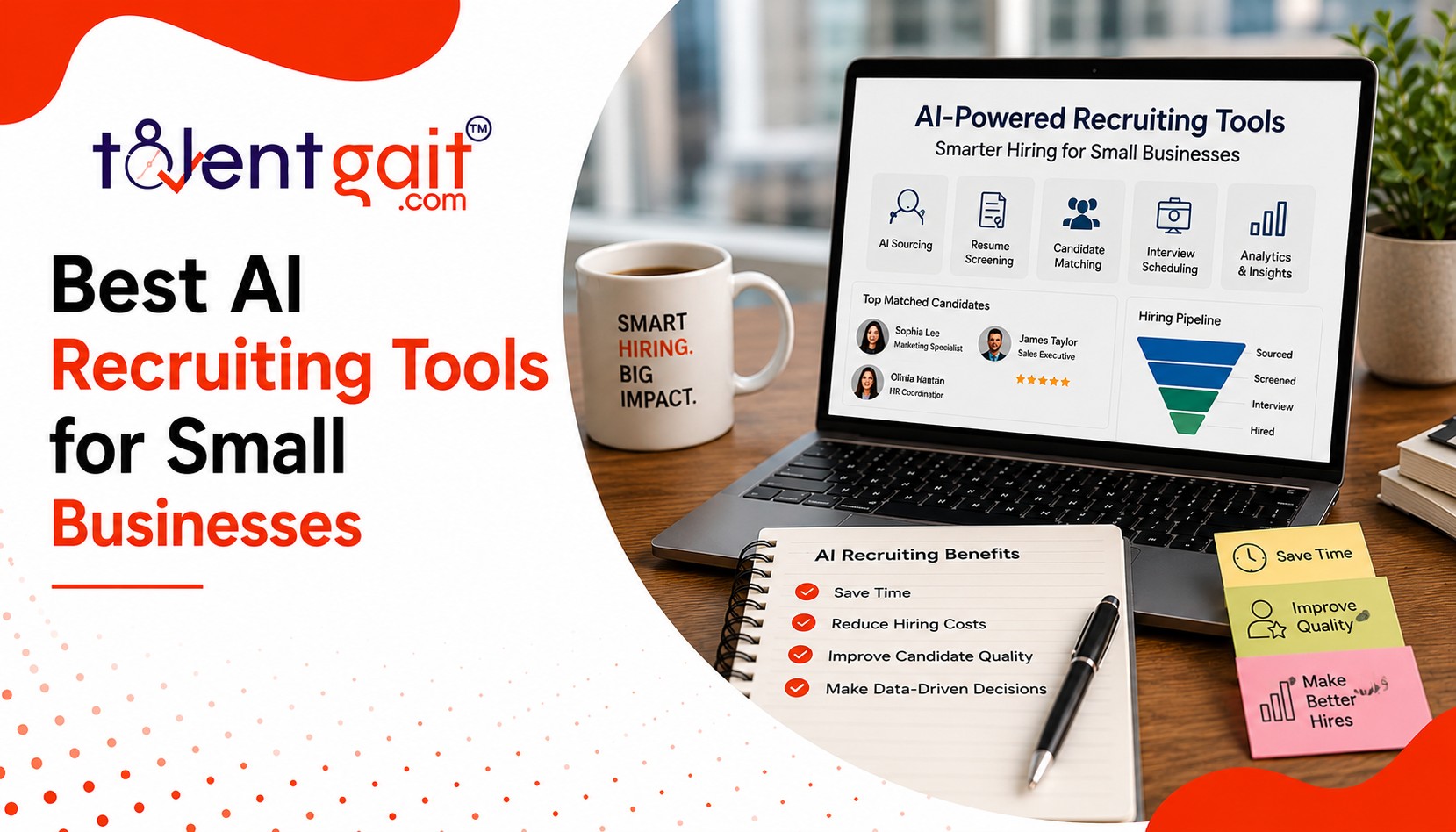
Small businesses hire with fewer people and less budget. One bad hire hurts. One open role that drags on for months hurts more. AI recruiting tools solve both problems — not by replacing your judgement, but by taking over the slow, manual work that eats your time. This post covers the tools worth knowing in 2026 and how to pick the right one for your team.
Small Businesses Are Hiring Smarter Now
The old way of hiring was slow. You posted a job, waited, sifted through CVs, and sent emails back and forth to book interviews. Most small teams did this on top of everything else they were already doing.
AI tools changed that. They automate the parts that don’t need a human — and free you up for the parts that do.
Workable brought in pay-as-you-go pricing so small teams aren’t locked into contracts. Breezy HR offers a free plan with solid pipeline management. Zoho Recruit starts at a low monthly cost and covers the basics without complexity. JazzHR was built for small hiring teams from the start. Manatal adds AI candidate scoring at a price that works for a one or two-person operation.
These tools don’t just save time. They help you hire faster and make fewer mistakes along the way.
5 Types of AI Recruiting Tools Small Teams Should Know
Not every tool solves the same problem. Before you spend anything, figure out where your hiring actually breaks down. Is it finding candidates? Screening them? Getting interviews booked? Each tool type below targets a different bottleneck.
1. AI Applicant Tracking Systems
An ATS with AI does more than store CVs. It ranks applicants, flags strong matches, and moves people through stages on its own. Workable and Breezy HR both work this way. If you’re getting 50 to 200 applications per role, this kind of automatic sorting saves hours without needing a dedicated recruiter.
2. AI Candidate Sourcing Tools
Sourcing tools search large databases to find people who haven’t applied yet. Juicebox lets you describe the person you want in plain language and shows you matching profiles. This matters when your ideal hire isn’t browsing job boards. You go to them instead.
3. Interview Scheduling Tools
Scheduling eats more time than it should. AI scheduling tools connect to calendars, check both sides for availability, and book slots without a single email chain. Paradox handles this well, even at high volume. For a small team running several roles at once, this change alone saves hours each week.
4. Skills Testing Platforms
CVs tell you what someone has done. They don’t show you what someone can do. Vervoe uses AI to test candidates on real job skills and ranks them by performance. This works especially well when you’re hiring for technical or hands-on roles where a wrong hire is expensive to fix.
5. All-in-One Platforms for Small Teams
Some businesses don’t want five separate tools. Manatal and Zoho Recruit package an ATS, sourcing features, and candidate communication into one platform at a low monthly cost. They won’t match an enterprise stack in depth. But they cover most of what a small team needs without the complexity or the price tag.
How to Choose Without Wasting Money
The wrong tool costs more than its subscription fee. It costs you the hours you spend working around it.
- Match the tool to your actual problem — sourcing, screening, scheduling, or tracking
- Avoid per-seat pricing if your hiring team is one or two people
- Check that the tool connects to whatever system you already use
- Start with a free trial before signing an annual contract
- Pick platforms with simple onboarding — you don’t have weeks to spare on setup
The right tool doesn’t do your job for you. It removes the admin that was getting in the way.
Conclusion
Small businesses have more practical hiring options in 2026 than ever before. Start with the tool that fixes your biggest problem. Use it well. Build from there once you know what else you need.