Blogs

Why You’re Not Getting the Right Candidates (And How to Fix It)

Abstract

Finding the right candidates has become one of the most serious problems in modern recruitment. However, in spite of higher access to job platforms, AI tools, and global talent pools, most organizations are faced with low-quality applications, unrelated profiles, and poor hiring results.

This does not happen because of poor talent, but rather a mismatch between recruiting practices and the changing workforce demands. This paper gives a systematic, scientific elaboration of why organizations cannot hire the right people and presents practical, evidence-based, and strategic ways of hiring that are consistent with the current hiring trends, robotization of hiring processes, and skills-based hiring approaches.

1. Introduction: The Problem of the Talent Mismatch.

The paradox of recruitment in 2026 is that, on the one hand, the number of applications received by companies is the highest in history, and, on the other hand, inappropriate candidates are difficult to find.
The LinkedIn Global Talent Trends Report 2024 states that attracting applicants is not among the major issues that employers face, but attracting qualified and relevant applicants is.
Such a mismatch is usually caused by obsolete hiring methods, the ambiguity of job positioning, and the failure to make use of recruitment technology.

Top 10 Reasons Why You are not recruiting the right candidates.

2.1 Poorly Defined Job Descriptions

Most of the job descriptions are ambiguous, excessive, or unrealistic. They often include:

  • Too many requirements
  • Unclear responsibilities
  • Generic language
  • Misaligned expectations

This leads to two problems:

  • Applications may not be made by qualified candidates.
  • Unqualified candidates can apply in great numbers.

Harvard Business Review holds a similar view that extremely detailed or unrealistic job descriptions drive away highly qualified candidates.

In 2023, IBM announced that it would freeze hiring for some back-office jobs that A.I. might be able to do. IBM did grow its hiring in AI, cybersecurity and consulting jobs.
It demonstrates automation and jobs are evolving together — not going away completely.

2.2 Over-Reliance on Degrees Instead of Skills

Conventional recruitment is usually inclined to focus on academic qualifications, and does not necessarily focus on practical skills. This restricts the access of qualified candidates.
The report on Future of Jobs published by the World Economic Forum in 2023 suggests that the skills of the workforce will change by almost 44 per cent, and the idea of hiring people with a degree will be less effective.
Those companies that do not use skills-based recruiting often fail to find employees with real-world skills but with unconventional backgrounds.

Ineffective Use of AI and ATS Systems

There are various organizations which operate Applicant Tracking Systems (ATS) in ways that are not right. Poor configuration causes, instead of the enhancement of hiring:

  • Outsourcing based on merit.
  • Excessive use of keyword matching.
  • Absence of contextual assessment.
  • Prepare reports

2.4 Weak Employer Branding

The candidates nowadays evaluate the companies as much as the companies evaluate the candidates.
The best candidates will not apply in case of an unclear or unattractive employer brand.
LinkedIn Talent Solutions stated that good employer branding may decrease costs per hire and enhance the quality of candidates significantly.

2.5 Slow Hiring Process

The best candidates have a short shelf life. Loss of quality talent occurs because of a slow hiring process.

Real Example: Unilever
Harvard Business Review reports that Unilever has cut the recruitment time by 75 per cent with an AI-driven recruitment system business model, enabling the company to acquire superior talent at a slower pace.

2.6 Lack of Data-Driven Hiring Decisions

Most of the hiring processes remain intuitive instead of being based on data. This results in some inconsistent outcomes.
The McKinsey Global Institute (20232024) report reveals that data-based hiring is effective in enhancing the matching of talents and efficiency in the workforce by up to 20-30 per cent.

2.7 Misaligned Salary and Expectations

In case compensation, scope of role or growth prospects are not aligned with the market standards, candidates are not going to apply, or they will withdraw in the middle.
This is particularly applicable in competitive industries such as technology, finance and AI-based jobs.

3. How to correct it: Strategic Solutions.

3.1 Create Clear and Targeted Job Descriptions

The strong job description must entail:

  • Well-established roles.
  • Necessary and not mandatory skills.
  • Realistic expectations
  • Impact of role and career advancement.

Be sure not to be overly demanding on unnecessary demands and concentrate on what is real to the job.

3.2 Shift to Skill-Based Hiring

Pay attention to what candidates are capable of doing, and not where they attended.
Real Example: IBM
IBM has also adopted the Skills First strategy (company reports 2023 2025), which focuses on competency-based hiring, as opposed to degree-based hiring.
This enables access to a transportable and better talent pool.

3.3 Optimize AI-Driven Recruitment Systems

Make good use of AI and ATS tools by:

  • Revision of keyword strategy.
  • Contextual matching (and not just basic filtering) is used.
  • Auditing the performance of the systems frequently.
  • AI is not supposed to restrict decision-making.

3.4 Strengthen Employer Branding

Through employer branding, it should convey:

  • Company culture
  • Growth opportunities
  • Work environment
  • Values and mission

Strongly branded organizations get good candidates automatically.

3.5 Speed Up the Hiring Process

Reduce delays by:

  • Automating scheduling
  • Structured interviews.
  • Eliminating redundant approval chain.

Rapid recruitment enhances accessibility and response of candidates.

3.6 Use Data and Predictive Hiring

Embrace a predictive hiring model which analyzes:

  • Candidate success patterns
  • Retention data
  • Performance metrics

McKinsey claims that data-driven hiring enhances long-term workforce performance.

3.7 Align Compensation with Market Standards

Periodically benchmark remuneration and benefits to be competitive.
Job seekers are now able to access salary information and market intelligence information, and therefore, transparency is important.

4. AI in Enhancing the Quality of Candidates.

AI is an important aspect of recruitment, as it facilitates:

  • Improved matching of candidates and jobs.
  • Automated screening
  • Skill-based assessments
  • Bias reduction
  • Real-time analytics

With the proper application of AI-enhanced recruitment, Gartner HR Research 2024 reports that it enhances the speed and accuracy of the decisions made in hiring.

5. The Advantages of Revamping Your Recruitment.

Organizations which alleviate these problems are characterized to have:

  • Higher quality candidates
  • Faster hiring cycles
  • Greater employee performance.
  • Better retention rates
  • Reduced hiring costs

Such results correspond with current tendencies of AI hiring and the future of hiring plans.

6. Future Outlook

The employment environment is taking a new direction:

  • Recruitment system based on AI.
  • Skill-based hiring models
  • Data-backed decision-making
  • Hire on candidate-centric hiring.

As stated in the World Economic Future of Jobs Report 2023, flexibility, innovativeness, and technical abilities will become the most important in the years to come.

Conclusion

The problem of failure to recruit the right candidates is not talent shortage- it is a gap in strategies.
Companies that apply the old school of thought in hiring, lack clear job descriptions and do not have efficient procedures, find it hard to hire good talent. Conversely, the companies that embrace AI-powered recruiting, skills-based hiring and data-driven recruiting always perform better.
The issue of hiring needs to be solved in a systematic manner involving the use of technology, strategy, and human judgment. In the future of work 2026, which is highly dynamic, the capacity to recruit the right candidates will determine success in an organization.

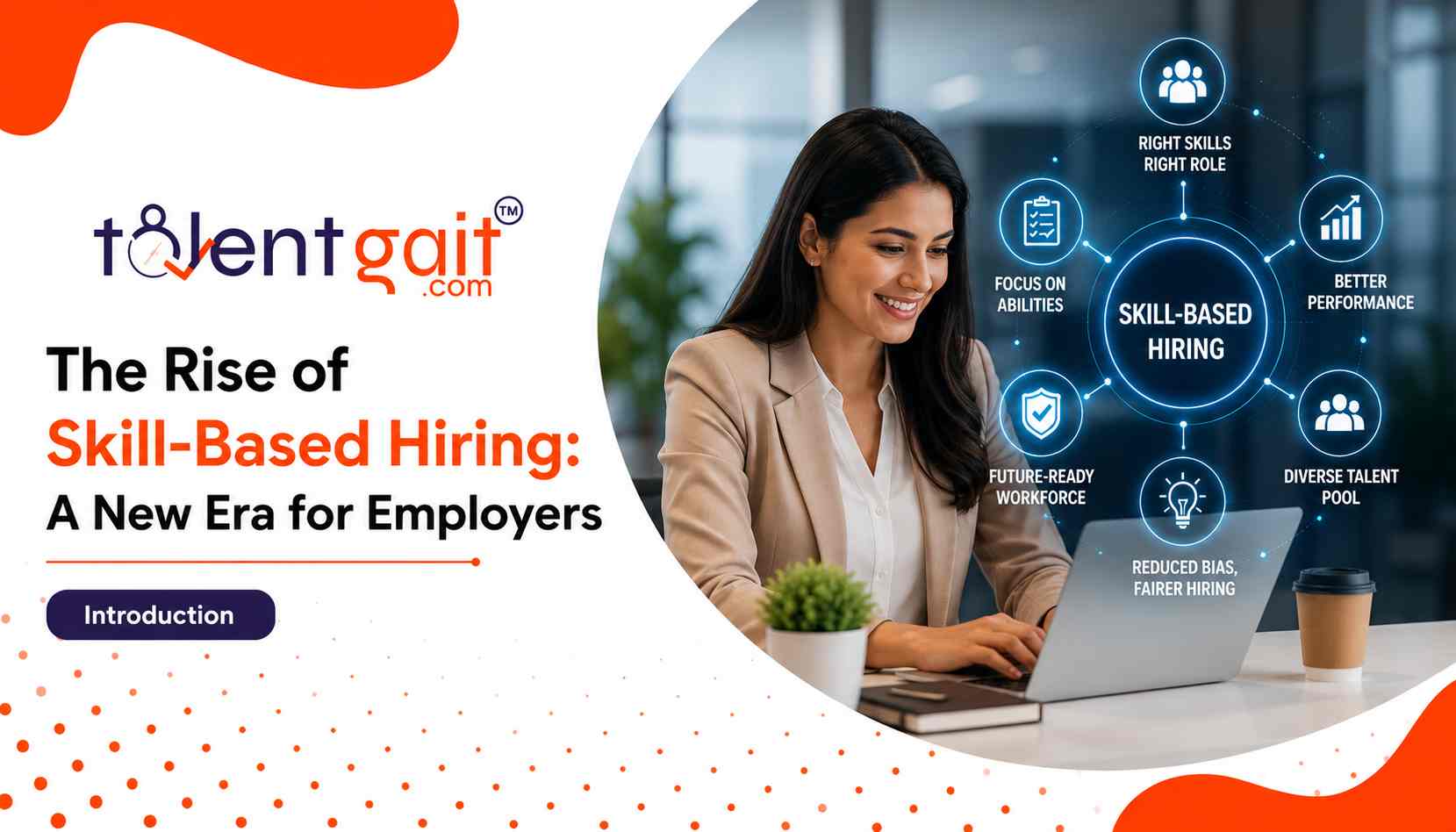
The Rise of Skill-Based Hiring: A New Era for Employers Introduction

Introduction

The international recruitment environment is experiencing a significant change. Over the decades, employers used to be very dependent on traditional means of assessing candidates based on university degrees, job titles, and years of experience. But the contemporary workforce requires a more realistic strategy. With the changing nature of industries thanks to the digital transformation, automation, and artificial intelligence, companies are shifting to skill-based hiring.
Skill-based hiring takes priority over the actual skills of a candidate and not just his or her educational background. Employers are currently looking at what a candidate is capable of performing, which includes technical skills, problem-solving skills, communication and adaptability. The change is the new era of talent acquisition, when skills and competencies have become the surest predictors of job performance.
It is also stipulated that in the LinkedIn Global Talent Trends Report 2024, where talent acquisition is based on skills, organizations tend to have better performance of their employees, higher retention, and a more diversified workforce.

What Is Skill-Based Hiring?

Skilled-based hiring- It is a method of recruitment whereby the employers focus on practical skills, competencies, and other actual abilities more than on the conventional qualifications such as degrees or job titles.
Instead of posing the questions like:

  • In which location did the candidate study?
  • How many years of experience?

Employers ask:

  • What are the particular skills that the candidate possesses?
  • Is the candidate able to do the job of the position?
  • Does the candidate possess the capacity to learn and adapt quickly?

This has changed because of the fact that academic credentials are not necessarily an indicator of success in the workplace.

Why Skill-Based Hiring Is Growing

A number of aspects are causing the increase in skill-based recruitment in any industry.

1. Rapid Technological Change

Artificial intelligence, cloud computing, cybersecurity, and data analytics are examples of technologies that are changing fast. Most of the universities are not able to change their curriculum as quickly as the industry demands. Consequently, employers are now going to hire only those candidates who have the relevant technical ability.
According to the World Economic Forum Future of Jobs Report 2023, almost 44 per cent of the skills of workers will be transformed in the coming five years because of technological innovations. This compels organizations to focus on flexible skills as opposed to fixed qualifications.

2. Sealing the Global Talent Gap

There is a lack of skilled professionals in many industries. Skill-based recruitment enables employers to have a broader talent pool because it eliminates unnecessary degree requirements.
The findings of a McKinsey Global Institute workforce report (2023) indicate that those companies that lift the degree requirement grow their pool of talent, particularly in technology and digital jobs.

3. Selling Diversity and Inclusion

The traditional hiring processes usually give preference to those who attended reputable universities, which is a limiting factor to diversity, unknowingly.
Skilled hiring deals with skills and not scholarly background. This enables employers to find skilled employees that may not belong to the traditional background, such as self-educated professionals, vocational graduates and career changers.
According to the Harvard Business School report titled Hidden Workers: Untapped Talent (2021), they discovered that there are millions of talented workers who are not hired due to the inflexible degree requirements, despite having relevant skills.

Real Examples of Skill-Based Hiring

IBM’s Skills-First Hiring Strategy

The best-known case of skill-based hiring is the Skills First program of IBM.
The IBM leadership has also reiterated that a number of the jobs in the field of technology do not need four-year degrees. As an alternative, the company will assess candidates according to technical skills, credentials and practical projects.
The IBM corporate reports (2023–2025) explain that close to fifty per cent of IBM positions in the United States do not need a four-year-degree any more. The company instead relies on skill assessment and training programs to get qualified potential employees.
This solution has contributed to IBM tapping into new sources of talent as well as overcoming shortages in cybersecurity, cloud computing, and AI creation.

Google’s Career Certificates Program

Google has not been left behind in adopting skill-based hiring as it has implemented Google Career Certificates.
As per the Google workforce development reports (2022–2024), the program trains people in fields of high demand, including:

  • Data analytics
  • Project management
  • UX design
  • IT support

Most employers have now accepted these certificates as equal to the real degrees in entry-level jobs. The program illustrates the potential opportunities that skills-based recruiting can generate in alternative career paths.

Unilever’s Data-Driven Hiring Process

Unilever has also updated its recruitment system through digital testing and AI-based evaluation technologies.
The studies published in Harvard Business Review and reported by Financial Times detail how Unilever relies on online games and behavioural testing, as well as AI-based video interview analysis to assess the skills of candidates.
The outcomes of this change are:

  • The employment procedure was shortened by about 75 per cent.
  • Recruitment savings to the tune of millions.
  • There is an increased and diverse pool of candidates.

The skills that the company targets include analytical skills, potential for leadership, and communication skills, as opposed to just academic qualifications.

The Role of AI in Skill-Based Hiring

AI is increasing the expansion of skill-based recruitment.
Recruitment systems based on the latest AI can process the profiles of thousands of candidates and compare them with the needs of the job according to the skill sets.

These systems can identify:

  • Technical competencies
  • Transferable skills
  • Learning ability
  • Cultural compatibility

Gartner HR Research 2024 provides evidence that organizations that deployed AI-driven hiring systems have accelerated the recruitment process and improved the match of candidates and job opportunities.
AI assists employers in shunning the standard methods of filtering by keywords and exploring deeper into the skill analysis.

Benefits of Skill-Based Hiring for Employers

Skill-based recruiting has a number of benefits to organizations.

Better Job Performance
Those employees who were recruited based on their real skills do not perform poorly since they have the required skills to carry out the job.

Faster Hiring Process
Digital tests and skill tests enable employers to recognize skilled job applicants within a shorter time.

Expanded Talent Pool
Laxity in educational requirements is a way of increasing the number of potential applicants.

Improved Workforce Diversity
Organizations can create more inclusive teams by hiring based on skills, as opposed to background.

Stronger Employee Retention
Workers recruited based on their ability tend to be more satisfied with their job and are able to develop their careers.

Challenges of Skill-Based Hiring

Although it has advantages, skill-based hiring is also problematic.

Measuring Skills Accurately
Employers should come up with effective evaluation procedures that can be used to test the abilities of the candidates without bias.

Organizational Mindset Change
A lot of hiring managers still use traditional credentials in assessing applicants.

Technology Implementation
The use of AI-related recruitment technologies and skill evaluation platforms is costly and involves training.
The most effective companies in terms of skill-based hiring have to combine technology and structured tests, with trained recruiters.

The Future of Skill-Based Hiring

The emergence of skill-based hiring will increase even faster within the upcoming decade.
According to the predictions in the World Economic Forum Future of Jobs Report 2023, employers will soon focus more on:

  • Analytical thinking
  • Creative problem solving
  • Technological literacy
  • Emotional intelligence
  • Ability to learn continuously.

These skills cannot be easily quantified using degrees, and hence, skill-based assessment is a necessity.
With the ever-changing nature of industries, organizations with skill-based recruitment practices will be able to tap into talent pools and thus be competitive in the global labour force.

Conclusion

The hiring based on skills is a radical change in contemporary recruiting. Employers are no longer basing their decisions on educational qualifications or experience, but they are rather focusing on practical skills and proven competence to judge applicants.
This practice has already been embraced by global firms like IBM, Google, and Unilever to deal with talent shortage, enhance diversity, and develop more robust workforces.
Skill-based hiring is emerging as one of the key principles in the future of work, supported by AI-based recruitment technology and digital skills tests.
Companies that focus more on abilities rather than titles are in a better position to hire the best talent, keep up with technological change, and win in the ever-competitive job market.

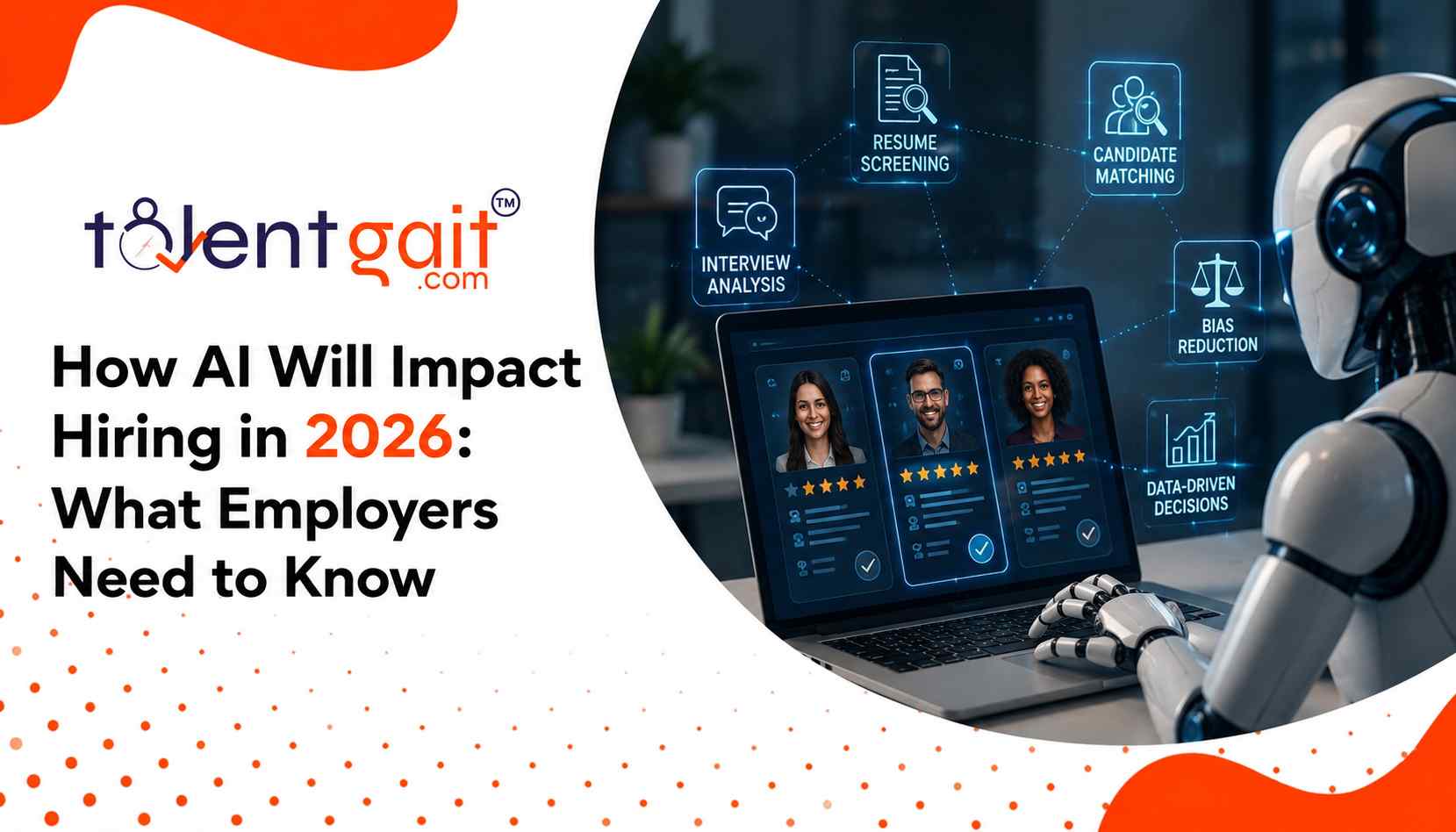
How AI Will Impact Hiring in 2026: What Employers Need to Know

Introduction

Artificial Intelligence (AI) is transforming recruiting. By 2026, though, A.I. won’t just aid hiring — it will be at the centre of it. AI is already used by many businesses to screen resumes, schedule interviews, and assess skills. It will be faster, more intelligent, and data-backed in terms of AI-powered recruitment in the years ahead.

In this article, we discuss in plain language how AI will change hiring up until 2026 — with real-life experiences and reliable sources.

1. What Is AI-Driven Recruitment?

AI recruitment simply refers to using artificial intelligence tools for hiring purposes. These tools can:

Scan and filter resumes automatically
Skills data for matching candidates with jobs
Schedule interviews
Answer candidate questions through chatbots
Make a prediction about which candidate will do best

As per the World Economic Forum Future of Jobs Report 2023, almost nine out of ten organizations surveyed—about 75% of businesses—expect to integrate AI technologies in the next few years. AI is being utilized in numerous fields, one of which is hiring.

2. Will AI Replace Recruiters?

AI is not replacing recruiters, at least not entirely. It is helping them.

AI could impact nearly 40% of jobs worldwide, according to the International Monetary Fund (IMF) World Economic Outlook 2024. But “affect” isn’t a synonym for “remove.” AI supports workers, rather than replaces them, in many instances.

For example:

In 2023, IBM announced that it would freeze hiring for some back-office jobs that A.I. might be able to do. IBM did grow its hiring in AI, cybersecurity and consulting jobs.
It demonstrates automation and jobs are evolving together — not going away completely.

3. Will AI Replace Recruiters?

Speed is one of the biggest pros of AI hiring trends in 2026.
Real Example: Unilever
Unilever used AI tools to screen job applicants and analyze video interviews (Harvard Business Review, 2019; later covered by Financial Times).

Results:

  • Hiring time decreased approximately 75%
  • Millions saved in recruitment costs
  • Increased diversity in hiring

This is an example of how predictive hiring systems can speed up the recruitment process without sacrificing quality.

4. Generative AI Is Helping Recruiters

Generative AI tools can now:

    • Write job descriptions
    • Create candidate outreach emails
    • Summarize interview feedback
    • Prepare reports

Real Example: Microsoft

Microsoft described how tools powered by AI, such as Copilot, had boosted productivity across departments, including HR, in its Annual Report 2024.

Recruiters now have less paperwork to write and more time to talk with candidates.

5. AI Supports Skill-Based Hiring

Companies value skills more than degrees in 2026. Real skills can be measured in tests and assessments, which AI systems do.
Real Example: IBM
For example, IBM’s “SkillsBuild” initiative (company publications 2023–2025) emphasizes hiring individuals based on skills rather than educational background.
Other AI tools assess coding, data skills and problem-solving ability rather than just reviewing resumes.
Companies leveraging skill-based hiring obtain superior talent acquisition outcomes and build more resilient teams, per the LinkedIn Global Talent Trends Report 2024.

6. AI Helps Reduce Bias (But Must Be Managed Carefully)

Used well, AI can help eliminate human bias. However, it is also able to create bias if it trained on biased data.
For example:
Amazon Scrap Gender-Biased AI Tech (2018) — the e-commerce giant scrapped its AI recruiting tool after realizing it was vulnerable to gender bias.
For reasons such as these, governments are enacting rules. In 2024, the EU AI Act was adopted by the European Parliament and has since mandated transparency and human oversight in AI-based recruiting systems.
And that means companies must be responsible with AI.

7. Better Candidate Experience

By 2026, hundreds of companies have deployed AI chatbots to respond to candidate queries around the clock.
Gartner HR Research 2024 suggests organizations that use AI chat systems improve response times and candidate satisfaction.
But humans are still needed for final interviews and decisions.

  • Identify those who are actively looking for work and those who aren’t
  • Match skills to open jobs
  • Build shortlists fast
  • Demonstrate talent which may not be noticed by a recruiter

8. What Industry Leaders Say

NVIDIA
In interviews with The Wall Street Journal (2024), officials at Anthropic, as well as Google, said A.I. could automate parts of knowledge work, but they emphasized that human regulation and control were needed.

These portents indicate that AI is changing work, not merely eliminating it.

9. Workforce Planning with AI

AI chat tools can be used to handle simple enquiries from job seekers at scale.

They can:

AI in HR hiring is just the beginning. It also helps companies:

  • Predict future skill shortages
  • Forecast employee resignations
  • Plan salaries
  • Identify training needs

AI tools can also enhance the efficiency of workforce planning by 20–30% in knowledge-based industries (McKinsey Global Institute — 2023-2024 reports).

10. Challenges Employers Must Understand

AI recruitment has challenges, even with benefits:

  • Data privacy risks
  • Bias in algorithms
  • Over-automation
  • Legal compliance issues

Due to new legislation such as the EU AI Act (2024), companies need to ensure that AI systems are fair and explainable.

Conclusion

AI will drastically impact hiring in 2026. The main impacts include:

  • Faster recruitment
  • Predictive hiring decisions
  • Skill-based hiring
  • Automated communication
  • Data-driven workforce planning

AI will never replace recruiters completely. Instead, it will assist them in working more efficiently. Such companies that are aware of the AI hiring trends and employ AI responsibly will enjoy a competitive edge in the future of work 2026.

References and Credits

  • World Economic Forum. Future of Jobs Report 2023.
  • International Monetary Fund. World Economic Outlook 2024.
  • Harvard Business Review. “How Unilever Uses AI in Hiring,” 2019.
  • Financial Times coverage on Unilever recruitment transformation.
  • Reuters. “Amazon scraps secret AI recruiting tool,” 2018.
  • Microsoft Annual Report 2024.
  • Gartner HR Research Reports 2024.
  • LinkedIn Global Talent Trends Report 2024.
  • LinkedIn Global Talent Trends Report 2024.
  • McKinsey Global Institute Reports 2023–2024.
  • Bloomberg reporting on IBM workforce strategy, 2023.
  • CNBC coverage of NVIDIA leadership interviews, 2024.
  • Wall Street Journal interviews with Anthropic leadership, 2024.
  • European Parliament documentation on the EU AI Act, 2024.


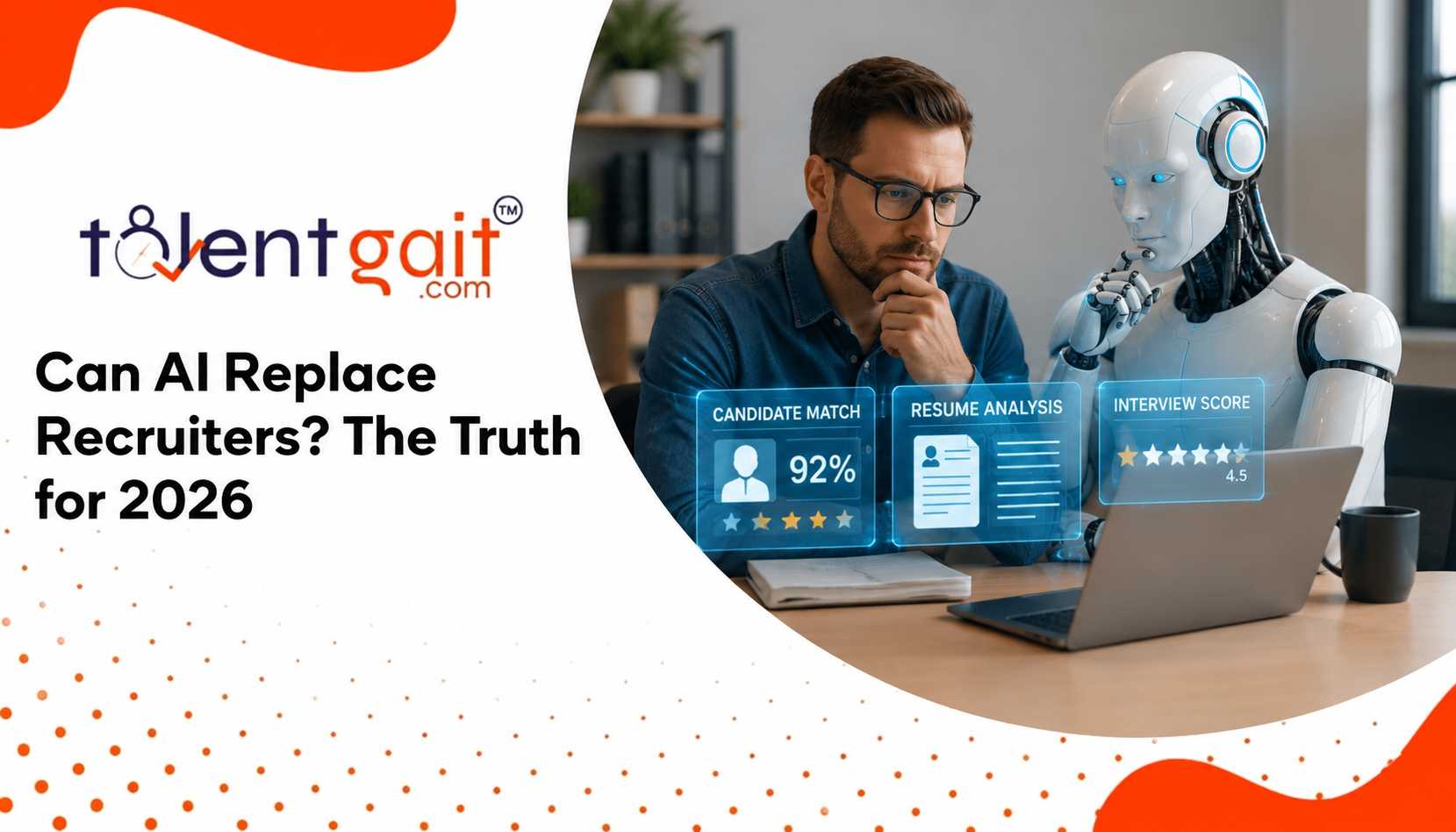
Can AI Replace Recruiters? The Truth for 2026

Abstract

AI has become a significant aspect of the hiring process. It can scan resumes, locate job seekers, arrange interviews, rate skills and organize the data in a short time. The change has prompted many companies to pose a huge question, “Will AI replace the recruiter position by 2026?The shift has made many companies wonder whether the recruiter position can be replaced by AI by 2026 or not.
The answer is: AI can perform numerous repetitive tasks. However, there must be trust, care and human choice involved in hiring. A recruiter is not just a name mover. Tone reading, building trust, coaching managers and assisting job seekers with major life decisions… that is the job of a recruiter.

In this newsletter, we will focus on what AI can achieve today, its limitations, and the future of AI. A shared model is the most probable route. In the former model, AI takes care of the fast and routine. Recruiters are in charge of the human and business aspects of hiring.

1.Introduction: The Rise of AI in Recruitment

Hiring has changed a lot in the last ten years. Historically, teams were spending hours to review resumes and do administrative tasks. With the help of smart tools, sifting through a large number of job applications can now be done within minutes.
These are among the many use cases of AI in many companies today:

  • Resume screening
  • Candidate matching
  • Interview scheduling
  • Chat help
  • Skills tests
  • Hiring forecasts

This change makes a lot of sense. Teams are required to hire quickly. They also have to reduce admin time and match them up. AI aids in all three of these. It saves time and allows recruiters to spend more time with individuals.
Nevertheless, fast does not necessarily lead to a good hire. Facts, judgment and care are required of a good hire. Hence, multiple companies today are combining tools with human intelligence.

2. Understanding AI-Driven Recruitment

AI-driven recruitment is the use of smart software to aid in recruitment. The system is data-driven and it assists teams to sort, rank, and review job seekers.

Machine Learning

  • Identifies trends from a set of hiring data
  • People who have finished tests in the past

Natural Language Processing

  • Able to read resumes and job posts
  • Match word, skills and role to fit

Predictive Analytics

  • Provides a measure of success or remaining rate

Generative AI

  • Composes e-mail drafts, notes and prompts

Behavioral Analysis Systems

  • Checks test outcomes and method of answering questions

These are more useful for the most in high volume hiring. They are able to sort data at a much higher speed than human. However, speedy sorting is not wise hiring.

3.What AI Can Already Do in Recruitment

AI works best on tasks that are simple, repeat, and based on data.

3.1 Resume Screening

Large groups of resumes can be scanned in a matter of minutes with the help of applicant tracking tools.
Benefits

  • Narrow down resumes based on skills, title or years of experience
  • Identify the key words in resumes
  • Rank people for the first review
  • Cut down admin time

Real Example: Unilever

Unilever leveraged AI for their recruitment process and reported that they reduced hiring time by approximately 75%. This finding highlights the importance of investing in AI hiring tools for many companies today.

3.2 Candidate Sourcing

AI tools can look through online profiles and talent lists for individuals that could be a good fit.
They can:

  • Identify those who are actively looking for work and those who aren’t
  • Match skills to open jobs
  • Build shortlists fast
  • Demonstrate talent which may not be noticed by a recruiter

3.3 Predictive Hiring

Some tools will rely on past experience to make predictions about the performance an individual might exhibit in a job.
They can look at:

  • Chance of success
  • The person will remain if it is by chance
  • Match score
  • Risk of early exit

This provides an additional stakeholder’s voice in the decision making process before the hiring team advances.

3.4 Automated Communication

AI chat tools can be used to handle simple enquiries from job seekers at scale.

They can:

  • Answer common questions
  • Send status updates
  • Book interviews
  • Ensure that people are kept informed

This makes it easier for busy teams to be more speedy and reduce wait time.

3.5 Skill-Based Assessments

AI can assist with conducting online tests, coding assignments, work samples, and skill tests.
This is suitable for:

  • Tech roles
  • Early screening
  • Skill-first hiring
  • Fair, same-format review

4. What AI Cannot Fully Replace

AI can do a lot. Yet, there are human aspects that are fundamental to hiring.

4.1 Human Judgment

The first place winner may not be the best hire. Recruiters usually know what they don’t want.
This can include:

  • Signs of leadership
  • Drive
  • Skill-first hiring
  • Team fit
  • Self-awareness
  • Room to grow

While a resume might be ordinary, recruiters see great potential in that individual.

4.2 Relationship Building

Job seekers are not just attracted to a company because of how fast they can get them. They wish to believe in people, their role and the work environment.
It is in part because recruiters can help build that trust by:

  • Having honest talks
  • Setting clear hopes
  • Showing care
  • Aimed at providing assistance at critical stages of decision-making

AI can send a message. It does not have a true connection.

4.3 Strategic Hiring Decisions

Senior roles require solid business acumen and foresight.
Recruiters collaborate with leaders to:

  • Outline the job description clearly
  • Adjust search strategy
  • Schedule some time to read about work changes
  • It is important to balance speed and fit

That work requires human thinking and knowledge of business.

4.4 Ethical and Bias Considerations

If AI is trained using biased historical data, it can perpetuate unfair patterns.AI can learn from a biased historical data and repeat unfair patterns.
Real Example: Amazon
Amazon has pulled an AI hiring system after it was found to discriminate against women in its resume parsing. One thing was clear in this case: AI is not self-sufficient and requires human observation, verification, and direction.

5. The Real Future: AI Will Transform Recruiters, Not Replace Them

The most likely way to go in 2026 is in a shared model.
AI Handles

  • Large-scale screening
  • Scheduling
  • Candidate search
  • Basic messages
  • Data sorting
  • Test support

Human Recruiters Handle

  • Final review
  • Job seekers: trust with you
  • Tips for Employers
  • Offer talks
  • Culture fit talks
  • Long-range talent plans

The combination provides quickness coupled with good judgment.

6.Industry Leaders’ Perspectives

Microsoft
Microsoft has stated that tools such as Copilot are designed to make people work better, not to eliminate the need for humanity. The same applies to people.

IBM
IBM has added AI to HR work and has put time into staff retraining. It’s a clear message: “jobs will move, and those who acquire new tools will remain useful.”
NVIDIA
NVIDIA’s executives have stated that AI will revolutionize the way people do their jobs and create fresh opportunities for them. That’s certainly the case with hiring.

7. How Recruiters Must Adapt in 2026

A recruiter who knows their AI tools well will be in demand.

Key Skills for Future Recruiters
Data Literacy

  • Read hiring data
  • Use reports well
  • Identify weak signals quickly

AI Tool Management

  • Use hiring platforms
  • Check tool output
  • Catch weak matches

Employer Branding

  • Present the firm in a straightforward manner
  • Communicate a positive work ethic
  • Establish a trust relationship with job seekers

Relationship Building

  • Keep hiring human
  • Handle people with caution
  • Support managers well

Strategic Workforce Planning

  • Tie hiring to business objectives
  • Identify shifts in roles as early as possible
  • Facilitate teams to plan in advance

8.Role of AI-Driven Recruitment Platforms

There are a lot of tasks that are all in one place when hiring with modern hiring tools.
They may include:

  • Candidate matching
  • Behavior profiles
  • Skill scoring
  • Hiring data review
  • Workflow tools

These systems save recruiters time for people and hiring decisions and reduce administrative time.

9. Challenges of AI Recruitment

Algorithmic Bias
Unfair scores and poor results may result from biased data.
Lack of Transparency
Some tools are black box type. There is no record of why a score was awarded.
Data Privacy Concerns
Private data is stored in the encrypted form of a password when a user logs in to hire data. Firms are responsible for its care and must adhere to the law.
Over-Automation
Over-automation can lead to a chilling hiring experience. Individuals looking for employment can lose faith if they sense that the process is being driven by the machine.

Future Outlook for Recruitment

Algorithmic Bias
In 2026, the recruitment landscape is expected to be a hybrid of human and AI, as both are expected to collaborate during the hiring process.

Key trends include:

  • AI-assisted sourcing
  • Skill-first hiring
  • Real-time hiring data
  • Better planning
  • More personal experiences of seeking work

Recruiters are not going away. They’re becoming more of a talent adviser and people care.

Conclusion

Algorithmic Bias
The hiring landscape is continuing its transformation with the help of AI for 2026. It can help accelerate screening, better source, and reduce admin. It can’t, however, do what recruitment requires judgment, trust and human care.
The more successful hiring teams will leverage AI for scale and recruiters for team and culture shaping decisions. AI is a powerful hiring tool, but recruiters remain essential—and that’s the reality for 2026 and beyond.

How Social Media Is Changing Recruitment in 2026

Abstract

Social media has become more than a communication tool; it has become a very important infrastructure in contemporary recruitment. Organizations are also utilizing social media to post job opportunities, brand themselves, engage with talent, and make job offers based on data as early as 2026.
LinkedIn, Instagram, and TikTok are changing the way employers engage with candidates, assess their profiles, and create talent pipelines.
This paper is a research-supported, structured examination of the ways in which social media recruitment is transforming the hiring process in 2026, with a series of examples in the real world and in line with the trends in AI-driven recruitment, employer branding, and the future of hiring.

1. Introduction: The Shift to Social Recruiting

Conventional recruitment strategies were based on job boards, recruitment agencies, and career portals. Nevertheless, the emergence of social media has brought about a more vibrant and interactive job market.

The LinkedIn Global Talent Trends Report 2024 states that most recruiters are proactive on social media to source and engage candidates. Social recruiting has become an essential component of talent acquisition strategy, especially in attracting passive candidates, who are not actively seeking employment.

2. What Is Social Media Recruitment?

Social media recruitment can be defined as the utilization of social media to:

  • Advertise job openings
  • Source candidates
  • Build employer brand
  • Connect with talent communities
  • Evaluate candidate profiles

In contrast to traditional hiring, social recruiting allows two-way communication, which implies that the candidates and the employers can get in touch with each other.

3. Key Ways Social Media Is Transforming Recruitment

3.1 Access to Passive Candidates

Access to passive talent—people not actively job hunting, but receptive to opportunities—is one of the greatest benefits of social media.
Social networks such as LinkedIn enable recruiters to find professionals according to their skills, experience, and activity in a particular industry.
LinkedIn Talent Solutions indicates that a significant percentage of the worldwide workforce is passive candidates and thus, social media is an important sourcing tool.

3.2 Stronger Employer Branding

Through social media, organizations are able to demonstrate their culture, values and working environment.
Real Example: Google
Instagram and YouTube are some of the platforms that Google considers to showcase its workplace culture, employee experiences, and innovation.
This plan enhances employer branding and will attract quality candidates all over the world.
LinkedIn claims that a well-established employer brand helps firms to hire superior employees and saves on hiring expenses.

3.3 Video-Based Recruitment and Short-Form Content

Video content that is short in form is proving to be an effective recruitment tool.
On platforms such as TikTok and Instagram:

  • Share job roles
  • Showcase company culture
  • Provide behind-the-scenes insights

Real Example: Deloitte

Deloitte has also embraced social media campaigns to reach out to young people, especially through video material, hence recruitment has become more interactive and relatable.

3.4 AI-Driven Social Recruiting

AI is improving social media recruitment by making it possible to:

  • Automated candidate sourcing
  • Profile analysis
  • Skill matching
  • Behavioral insights

Gartner HR Research 2024 indicates that AI-enhanced recruitment tools can enhance the efficiency and accuracy of hiring methods when combined with social sites.
AI assists recruiters in sifting through extensive numbers of profiles and pinpointing valuable applicants within a short period of time.

3.5 Data-Driven Talent Insights

Social media networks are a good source of information regarding the behavior of the candidates, their interests, and their interactions.
Organizations can analyze:

  • Content interactions
  • Professional activity
  • Network connections

The McKinsey Global Institute (2023–2024 reports) says that data-driven hiring enhances the workforce outcomes and the accuracy of decision-making.

3.6 Enhanced Candidate Engagement

Through social media, employers and candidates are able to communicate in real time.
Recruiters can:

  • Answer questions in real-time
  • Share updates
  • Develop relationships over time

Gartner HR Research 2024 states that a better communication level translates to a better candidate experience and engagement levels.

4. Real-World Examples of Social Media Recruitment

Unilever

Unilever deploys digital platforms and social media platforms to recruit and onboard candidates and build them into an AI-enabled hiring process.
Harvard Business Review and Financial Times reports that this strategy has enhanced hiring performance and diversity of candidates.

IBM

IBM uses social sites to advertise its Skills First job policy, which concentrates on capabilities and not degrees.
This practice increases the availability of talent pools and hiring based on skills.

Microsoft

Microsoft is employing social media to conduct employer branding, post job opportunities and reach out to talent communities worldwide.
The Microsoft Annual Report 2024 entails that recruitment outreach and efficiency has been enhanced through digital engagement.

5. Benefits of Social Media Recruitment

Companies that embrace social recruiting will have the following benefits:

  • Wider talent reach
  • Availability of passive applicants
  • Stronger employer branding
  • Faster hiring cycles
  • Cost-effective recruitment

These advantages can be linked to the larger trends in AI hiring and recruitment strategies of the future.

6. Challenges and Risks

Information Overload

Candidate evaluation can become complicated due to large volumes of data.

Bias and Privacy Concerns

The assessment of personal profiles can be biased and ethically questionable.

Platform Dependence

The dependency on certain platforms can restrict the diversity of talents.

Regulatory Compliance

Organizations should adhere to data protection laws in the use of candidate data.

7. Best Practices for Social Media Recruitment in 2026

Organizations ought to maximize effectiveness by:

  • Establish an effective social recruiting plan
  • Be consistent with employer branding
  • Screen efficiently using AI tools
  • Be transparent and ethical
  • Interact regularly with talent communities

8. Role of Platforms Like Talent Gait

New hiring tools like Talent Gait combine AI recruitment, behavioural profiling, and skill matching with digital sourcing approaches.
These sites assist organizations:

  • Identify high-quality candidates
  • Improve hiring accuracy
  • Reduce time-to-hire
  • Enhance candidate experience

Such solutions allow smarter and more efficient hiring processes by integrating social media insights with more advanced analytics.

9. Future Outlook

By the year 2026 and beyond, social media recruitment will keep on evolving by:

  • AI-powered candidate discovery
  • Video-first hiring strategies
  • Real-time engagement tools
  • Connection to workforce analytics

The World Economic Forum Future of Jobs Report 2023 states that digital capabilities and flexibility will become key factors, and social platforms will be necessary to reach future talent.

Conclusion

Recruitment is radically changing with the advent of social media, where organizations can now reach, engage and evaluate their candidates in a new way. LinkedIn, Instagram, and TikTok are new media platforms that have become a key component of contemporary hiring policies.
Social recruiting, with a little help from AI tools and data, helps companies work faster, find more candidates, and look better as an employer.
Companies that actually use social media well in their hiring process are going to have a real advantage—especially looking ahead to 2026, when having a strong online presence and real engagement will be key to finding the right people.

AI Summit 2026: The Future of Hiring in an AI-Driven Economy

Abstract

The future of the recruitment and workforce strategy is to be found in 2026. Business leaders, policymakers, AI researchers, and talent strategists at global forums and technological conferences all known as AI Summit 2026, highlighted that the hiring systems are structurally changing. The redefinition of how organizations find, evaluate and nurture talent is happening through the use of artificial intelligence (AI), automation, predictive analytics, and generative technologies.
This paper is a research based overview of the trends in hiring in an AI-driven economy, citing quotes and efforts of major technology leaders and companies. It explores the consequences to employers, job seekers, and workforce planning systems and underscores the strategic role of AI-based recruitment systems in the transition.

1. The AI-Driven Economy: Context and Workforce Shifts

1.1 Economic Transformation Through AI

Artificial Intelligence has not just been limited to automation of routine processes, but to making decisions, predicting, coding, generating content, and optimizing enterprises. The labor market is facing: The use of AI is increasing rapidly in industries, and it includes:

  • Re-designing of roles and not a complete removal of job.
  • More AI competent professionals needed.
  • More focus on flexibility and conceptualization.
  • Monotony of cognition is automated.
  • There is a changing environment in the hiring landscape.

2. Key Themes Emerging at AI Summit 2026

In spite of the fact that there are different AI summits all over the world, the theme of workforce transformation and talent strategy was a constant discussion in all of 2026 events.

2.1 Automation of White-Collar Work

In 2026, Mustafa Suleyman, who works at Microsoft, told a crowd at conferences that AI automation of office jobs is growing faster, and that AI can perform more analytical and operational jobs that were once deemed secure.
Source: Fortune (2026 timelines of AI automation).

2.2 AI-Augmented Software Development

One early warning that AI models will soon be able to do most software engineering work came in early 2026 when Dario Amodei, the CEO of Anthropic, made the claim. His statements, published by Financial Express and Business Insider highlighted the change in technical-based recruiting needs at a high rate.
Sources: Financial Express (2026); Business Insider (2026).

2.3 Productivity Through AI Infrastructure

According to Jensen Huang, the CEO of NVIDIA, AI will not replace human ability, but enhance it exponentially with investments in AI infrastructure.
(2026 industry analysis) Credit: Business Insider.

3. The Future of Hiring in an AI-Driven Economy

3.1 Shift From Degree-Based to Skill-Based Hiring

AI labor markets put the measurable skills (not credentials) first. The employers are becoming dependent on:

  • Competency mapping
  • Technical assessments
  • Behavioral analytics
  • Real-world simulations

Skill-based recruitment minimizes discrimination and enhances consistency between employer demands and the skills of the applicants.

3.2 AI-Powered Recruitment Systems

Recruitment sites of the modern times include:

  • Natural Language Processing (NLP) Resume parsing.
  • Predictive match of candidate.
  • Screening and ranking Automated.
  • Video interview sentiment analysis.
  • Bias detection algorithms

The technologies can save a lot of time-to-hire and enhance quality-of-hire outcomes.

3.3 Predictive Workforce Planning

Organizations are using AI to predict:

  • Skill shortages
  • Attrition probabilities
  • Emerging role requirements
  • Training needs

Such a transformation in the recruitment strategies to the predictive type of workforce is one of the main changes in hiring that can be discussed at the AI Summit 2026.

4. Real-World Corporate Transformations

4.1 Unilever’s AI Hiring Model

Unilever has used AI-based evaluations and online interview analytics in hiring graduates.
Outcomes:

  • Great decrease in time-to-hire.
  • Higher diversity of the candidates.
  • Better hiring integrity.

Citation: Unilever Future Leaders Programme reporting (extensively used case study).

4.2 IBM’s AI-Driven Talent Strategy

The company of IBM applies AI-based internal mobility and skills inference systems to match employees to changing project requirements.
Results:

  • This is accelerated internal hiring.
  • Less reliance on external recruiting.
  • Better skill alignment

IBM Talent and Transformation Strategy documentation.

4.3 Salesforce and Employer Branding

Salesforce incorporates employer branding along with data-driven recruitment analytics to increase the engagement of the candidates and provide acceptance rates.
Credited Salesforce Employer Brand Strategy coverage (2026 industry reports).

5. Emerging Hiring Trends Identified in 2026

5.1 Hybrid Human-AI Decision Making

According to Dario Amodei, the same can be said of the so-called centaur model when it comes to hiring. Ranking of candidates, as well as predictive scores are generated by AI systems, whereas final decisions are confirmed by human recruiters.

5.2 Increased Focus on AI Literacy

Employers have now shifted their focus towards a candidate who can:

  • Collaborate with AI systems
  • Interpret AI outputs
  • Maintain ethical oversight
  • Develop AI enhanced workflows.

Artificial intelligence is emerging as a cross-functional competency.

5.3 Ethical AI and Bias Mitigation

In the AI Summit talks, it was consistently pointed out:

  • Transparent algorithms
  • Explainable AI in hiring
  • Adherence to privacy regulations.
  • Accountable automation management.

The hiring systems are subject to scrutiny in order to make them fair and inclusive.

6. Economic and Labor Implications

The existence of the AI-driven economy does not mean the loss of jobs but implies the reorganization of the talent. Jobs with monotonous analysis or canned productivity have more automation potential. On the other hand, jobs that need a analytical approach, innovation, systems design, and decision making are growing.
Economic models suggest:

  • There can be an entry-level automation risk increase.
  • Top-level technical management positions will rise.
  • Owing to AI governance, there will be an increase in demand.

Such trends are forcing organizations to reconsider their talent acquisition strategies.

7. Talent Strategy Solutions in the AI Era

With the changes in the hiring process, companies need smart recruitment partners who can overcome the technological complexity.
As an AI-based recruitment and workforce intelligence tool, Talent Gait fits the AI Summit 2026 topics by:

  • Applying behavioral profiling in hiring high impact.
  • Sustainable placement scoring of culture.
  • Incorporating shortlisting systems that are in line with DEI.
  • Supporting predictive workforce planning

The recruitment systems in an AI economy should be changed to strategic talent orchestration models instead of transactional hiring models.

8. Conclusion

AI Summit 2026 brought out a radical change in the global employment ecosystem. Quotations of leaders like Dario Amodei, Jensen Huang, and Mustafa Suleyman indicate that there is an agreement that AI will significantly alter the process of recruitment and workforce design.
The future of hiring in an AI-driven economy will be characterized by:

  • Data-driven and skill-based recruitment.
  • Decision systems that are AI enhanced.
  • Unbiased and ethical algorithms.
  • Constant adjustment of the workforce.

When implemented strategically, in the context of industries that adopt AI in the recruitment process, without neglecting human control and cultural compatibility, organizations will benefit in terms of their competitive advantage in acquiring talent.
The economy of the future, which is AI-driven, is not transforming hiring as a function; it is transforming hiring as a strategic capacity needed to survive in the organization and to innovate.

Will AI Replace Software Engineers? Anthropic CEO’s Bold Warning Explained

Abstract

The fast pace of AI and generative coding systems is accelerating the conversation around the future of software engineering jobs. In 2026, Dario Amodei, the CEO of Anthropic, made headlines across the world when he claimed that AI models would be able to do 90% of a software engineer’s daily job. His comment has initiated debates in technology, labour economics and enterprise workforce planning circles.
This article provides a detailed, structured, and research-based explanation of the claim, evaluates industry reactions, presents documented examples, and examines what this shift means for employers, engineers, and talent platforms such as Talent Gait, which positions itself as an AI-powered recruitment and talent intelligence solution provider.

Background: AI in Software Development

Evolution of AI Coding Systems

AI-supported coding tools have transitioned from simple auto-completion to more sophisticated generative systems, which can:

  • Write full code modules
  • Refactoring legacy systems
  • Generating documentation
  • Automating testing scripts
  • Debugging syntax-level issues

Large Language Models (LLMs) such as Anthropic’s Claude and similar systems can interpret natural language prompts and generate production-ready code in multiple programming languages.
This progression has significantly altered the software development lifecycle (SDLC) by reducing time spent on repetitive tasks and increasing development velocity.

Anthropic CEO’s Warning Explained

In early 2026, Dario Amodei claimed that AI could automate most, or maybe all software engineering tasks within six to twelve months. The claim implied that manual coding would be less common.
Documented Coverage
The following statement has been widely covered in key publications:

  • Financial Express (2026): “Software engineering redundant in a year? Anthropic CEO warns…”
  • Business Insider (2026): Coverage of the ‘centaur phase’ of engineering
  • Economic Times (2026): AI’s impact on white-collar jobs.

The reports describe Amodei’s observations as an internal remark that engineers are spending more time overseeing and tweaking the outputs of AI systems, rather than programming them from scratch.

The “Centaur Phase” of Software Engineering

According to Business Insider reporting, Amodei called the current era a “centaur phase,” an amalgam where humans and AI work together.
In this model:

  • Initial drafts of code are created by an AI
  • Engineers refine architecture and logic
  • Humans oversee validation and deployment
  • This does not say that it is replaced, but rather that the roles transform

Industry Reactions and Counterarguments

The prediction has not gone uncontested.

NVIDIA’s Position

NVIDIA CEO Jensen Huang recently rejected this narrative in a widely circulated example, arguing instead that AI will make programming more efficient and open up new opportunities.
Source credit: Business Insider (2026 software selloff reactions coverage).

Zoho’s Perspective

Sridhar Vembu, the founder of Zoho, counselled circumspection while also acknowledging that AI tools were transforming coding routines.
Source credit: Financial Express (2026 coverage of Anthropic warning).

Microsoft AI Leadership

Mustafa Suleyman, AI executive at Microsoft, has publicly discussed automation timelines for white-collar roles, suggesting rapid evolution but not immediate universal displacement.

Real-World Implementation Evidence

AI-Augmented Development

Companies switching to AI-powered coding assistants notice:

  • Reduced development cycles
  • Fewer syntax errors
  • Increased productivity per engineer

Within Anthropic, engineers reportedly spend more time reviewing AI-generated code than they do writing it by hand.
Source credit: Business Insider and Financial Express, 2026.

Academic Perspective

A 2026 arXiv research paper on AI in software engineering found that while AI can automate structured tasks, complex architectural reasoning, stakeholder alignment and system integration are still largely human-driven.
Source credit: arXiv research publication (2026).

Will AI Replace Software Engineers? Analytical Assessment

Tasks Most Likely to Be Automated

  • Boilerplate coding
  • Basic CRUD applications
  • Syntax debugging
  • Unit test generation

Tasks Less Likely to Be Fully Automated

  • Systems architecture
  • Security-critical infrastructure
  • Ethical oversight
  • Cross-functional product planning
  • Organizational decision-making

The current available evidence supports augmentation, rather than ablation.

Labour Market Implications

AI’s effect on software engineers should:

  • Cull and repurpose into higher-level engineering roles
  • Reduce entry-level repetitive coding positions
  • Ramp up the focus on AI literacy and quick engineering
  • Increase the significance of system design knowledge

The software engineering discipline may never fade away, but its skill mix is changing quickly.

Talent Gait’s Role in the AI-Driven Talent Landscape

As AI changes the profile of who to hire, talent strategy has to change as well.
This change is what Talent Gait introduces as an AI-driven talent intelligence and recruitment solution:

AI-Enhanced Candidate Matching

Behavioural matching and role-specific alignment to connect engineers to their next role outside the code.

Culture-Fit and Adaptability Assessment

In an AI-enhanced workforce, flexibility and strategic thinking become vital skills.

DEI-Aligned Shortlisting

Safeguarding diversity in new areas of technology where automation tends to concentrate opportunities.

Future-Ready Workforce Planning

Assisting companies to recruit Engineers who can do:

  • AI integration
  • System architecture
  • Cloud-native engineering
  • Security engineering

In a future where AI may automate coding work, Talent Gait assists companies in hiring engineers that design, govern and strategically deploy AI also as oppose the technology.

Conclusion

Dario Amodei’s dire warning has only added fuel to the fire over AI as a threat to software engineering. There is evidence that AI will heavily automate basic programming activities, which could have implications for entry-level positions and the pace of output.
But figures in the industry, including Jensen Huang, say that AI will supplement rather than replace engineering. There’s academic research that backs the argument that human oversight, systems design expertise, and ethical governance remain essential.
The future of software engineering is therefore most accurately characterized, not by its displacement but rather by its transformation. The companies that embrace forward-looking hiring tactics — with the reinforcement of AI-driven hiring solutions like Talent Gait – will be best positioned to succeed through this transformation.

How Employers Can Reduce Time-to-Hire Without Losing Top Talent

Abstract

Time-to-hire is one of the primary KPIs in contemporary recruitment. It expresses how effectively a business can turn a need for talent into having them on board and delivering results. In high-demand job markets, slow hiring processes often lead to losing strong candidates, increasing the cost to hire and inefficiency. Simultaneously, the process from rejections to offers and hires is too fast, which may mean the organization does not adequately assess for candidate quality or cultural fit and does not then retain people long term.
Drawing from evidence-based work on how employers can cut time-to-hire without losing the best people, this article provides a full examination of how hiring systems can be redesigned to focus on workforce planning, pools of talent, recruitment technology, structured decision-making and candidate-centric engagement. Examples from some of the best-known companies in the world demonstrate how speed and quality can go hand in hand.

1. Time-to-Hire in Contemporary Recruitment Systems

1.1 Definition and Measurement

Time-to-hire In the organisation in which this study was conducted, time to hire referred to the length of time between a candidate’s entry into the recruitment process and acceptance of a written offer of employment. This is the efficiency of hiring workflows and is not to be confused with time-to-fill, which measures vacancy duration from job requisition approval to offer accepted.
By 2026, time-to-hire metrics will be closely watched at:

  • Role level
  • Department level
  • Geographic level

Fine-grained measurement allows targeted optimization, not universal acceleration.

1.2 Strategic Importance of Time-to-Hire

The longer hiring times that can be measured have effects such as:

  • High-demand candidates are being lost to faster-moving competitors
  • Lower productivity of workers as a result of prolonged vacant posts
  • Increased recruitment and agency costs
  • Negative perceptions of organizational agility

Yet reducing time-to-hire has to be treated as a quality-enhancing endeavour, not simply an imperative for speed.

2. The False Dichotomy Between Speed and Talent Quality

2.1 Why Faster Hiring Often Fails

They introduce to the organization something that concentrates only on speed:

  • Insufficient role definition
  • Inconsistent interview evaluation
  • Subjective decision-making
  • Rushed offer approvals

These practices result in greater odds of mis-hires, early attrition and rehire costs.

2.2 Sustainable Hiring Efficiency

Best-in-class employers are well aware that process discipline (not speed) is the key to faster hiring. Great systems remove the friction, redundancy and indecision — without sacrificing the rigour of evaluation.

3. Workforce Planning as the Foundation of Faster Hiring

3.1 Anticipatory Workforce Planning

Employers with the consistently lowest time-to-hire practice forward-looking workforce planning. This includes:

  • Anticipating skill shortages
  • Connecting business expansions to talent needs
  • Identifying mission-critical roles in advance

Taking control of this process and planning will help you eliminate rushed decision-making.

3.2 Role Clarity and Hiring Precision

  • Unclear roles can add weeks to hiring.
  • Effective job architecture includes:
  • Clearly articulated responsibilities
  • Required and preferred skills differentiation
  • Defined success metrics

Clarity speeds up candidate assessment and makes hiring manager adoption more efficient.

4. Talent Pipelines as a Speed and Quality Multiplier

4.1 The Role of Talent Pipelines

A talent pipeline is diligently nurtured pool of préqualified, role-aligned candidates that can be activated for hiring as needs arise.
Well-managed pipelines reduce:

  • Sourcing lead time
  • Screening delays
  • Candidate mismatch rates

Pipelines are hiring shift from reactive execution to strategic readiness.

4.2 Real-World Example: IBM

IBM has built an enterprise talent pipeline system with AI skill inference and internal mobility in mind.
Results include:

  • Reduced external hiring dependency
  • Faster placement of role-ready candidates
  • Better matching of skills and needs of businesses
  • Credit: IBM Talent & Transformation Strategy

5. Recruitment Technology and Automation

5.1 AI-Enabled Applicant Tracking Systems

Today’s ATS software uses AI to:

  • Parse resumes with semantic accuracy
  • Sort the candidates by Role score
  • Eliminate manual screening bottlenecks

The impact of automation is to expedite hiring and to ensure consistency and fairness.

5.2 Real-World Example: Unilever

Unilever Future Leaders’ Programme, the corporation’s global graduate recruitment programme with:

  • AI-driven resume screening
  • Online cognitive and behavioural assessments
  • Asynchronous video interviews

Outcomes:

  • Approximately 75% reduction in time-to-hire
  • Improved candidate diversity
  • Higher candidate satisfaction scores

Credit: Unilever Future Leaders Programme

6. Structured Hiring Processes and Interview Design

6.1 Standardization for Speed and Accuracy

Unstructured interviews drag out and bias the decision-making.
Structured hiring frameworks include:

  • Standardized interview stages
  • Role-specific evaluation criteria
  • Pre-defined scoring rubrics

Standardization leads to less time thinking and getting a feeling of certainty.

6.2 Real-World Example: Google

Google used structured interviews and data-driven hiring rubrics throughout their hiring process.
Impact:

  • Faster consensus-building
  • Improved quality-of-hire
  • Reduced interviewer variability

Credit: Google People Operations Research

7. Recruitment Analytics and Data-Driven Decisions

7.1 Identifying Bottlenecks Through Data

Hiring analytics helps employers drill down on the delays.
Key indicators include:

  • The time spent at each stage of hiring
  • Interview-to-offer conversion rates
  • Candidate drop-off patterns

Selective interventions are better than general speeding of processes.

7.2 Predictive Hiring Models

In 2026, predictive analytics support:

  • Candidate success forecasting
  • Early elimination of low-fit profiles
  • Reduced over-interviewing

Knowing in advance makes decisions faster with no loss of quality.

8. Hiring Manager Enablement and Accountability

8.1 Hiring Manager Preparedness

Hiring managers significantly influence time-to-hire.
High-performing organizations invest in:

  • Interview training
  • Clear evaluation guidelines
  • Defined decision timelines

Prepared managers reduce process inertia.

8.2 Decision Ownership Models

Clear accountability prevents approval delays.
Ownership models of decision-making facilitate governance in hiring and minimize escalation friction.

9. Candidate Experience as a Competitive Advantage

9.1 Transparent and Timely Communication

Excellent prospects turn off when communication is erratic.
Effective candidate communication includes:

  • Clear process timelines
  • Prompt feedback
  • Transparent next steps

Strong communication reduces candidate withdrawal.

9.2 Offer Management Optimization

The number one reason for talent loss is the lag time between final interviews and offers.
Optimized offer processes include:

  • Pre-approved compensation ranges
  • Digital offer workflows
  • Accelerated negotiation protocols

Offer readiness preserves hiring momentum.

10. Employer Branding and Trust Acceleration

10.1 Employer Brand Influence on Hiring Speed

Effects for Those with Strong Employer Brand Companies that have a strong employer brand feel:

  • Higher candidate trust
  • Faster offer acceptance
  • Reduced negotiation resistance

Brand credibility shortens decision cycles.

10.2 Real-World Example: Salesforce

Salesforce incorporates value transparency, cultural inclusivity messaging, and regular candidate communication into its hiring structure.
Results:

  • Higher candidate engagement
  • More rapid interview to acceptance and conversion

Credit: Salesforce Employer Brand Strategy

11. Aligning Speed With Long-Term Talent Outcomes

Decreasing time-to-hire needs to be weighed against:

  • Quality of hire
  • Retention rates
  • Performance outcomes

Companies that find a middle ground between speed and a more structured evaluation see sustainable success in hiring.

Conclusion

Also, companies can lower their time-to-hire without compromising on talent by upgrading from reactive and fragmented hiring models to structured, data-based, and candidate-driven recruitment systems. Workforce planning, talent pipelines, AI screening technology, standardized interviews and assessments, accountable hiring managers , and a strong employer brand combined enable fast hiring without sacrificing quality.
In modern talent markets, speed and excellence are not competing objectives. When hiring processes are designed with discipline, transparency, and foresight, faster hiring becomes a reflection of organizational maturity rather than a compromise of talent standards

How to Build a High-Quality Talent Pipeline in 2026

Abstract

A talent pipeline is a proactive recruitment approach where an organization seeks out and cultivates relationships with potential candidates—often before they need them. By 2026, candidate pools are no longer based on static databases but have become data-powered, AI-driven workforce ecosystems emphasizing relevance of skills, culture alignment and diversity as well as long-term talent readiness.
In this article, we outline a method for doing so that’s both systematic and evidence-based, allowing leaders to develop a talent pipeline of their own to meet the needs of 2026 by utilizing cutting-edge recruitment technologies, workforce analytics tools, employer branding strategies and strategic hiring practices to maintain ongoing access to top talent – but in less time with far fewer costs.

1. The Importance of Talent Pipelines in 2026

1.1 Changing Hiring Dynamics

In 2026, the global world of hiring is influenced by:

  • Lack of skills—technology and specialization alike
  • Rising requirement for remote and hybrid work forms
  • Shorter candidate availability windows
  • Higher expectations for candidate experience

What this means is that a reactive hiring strategy is no longer going to cut it.

1.2 Talent Pipelines as a Strategic Advantage

High-quality talent pipeline for the organization ResultPositive is a nice tool to have:

  • Reduce time-to-hire
  • Improve quality of hire
  • Minimize hiring disruptions
  • Enhance workforce planning accuracy

On the other hand, talent pipelines move recruitment from tactical delivery to strategic enablement.

2. Defining a High-Quality Talent Pipeline

The characteristics of a great flow of talent are not quantity, but rather relevance, readiness and engagement.
Key Characteristics of a Quality Pool of Talent

  • Role-aligned candidate profiles
  • Verified skills and experience relevance
  • Cultural and behavioural fit indicators
  • Continuous candidate engagement
  • Diversity and inclusion representation

Great pipelines prefer accuracy to scale

3. Workforce Planning and Demand Forecasting

3.1 Data-Driven Workforce Planning

An effective pipeline starts with being able to forecast your labor market.
Key inputs include:

  • Business growth projections
  • Attrition and retirement trends
  • Skill gap analysis
  • Technology and automation impact

Predictive pipelines connect hiring to future business demand.

3.2 Role and Skill Taxonomy Development

Standard role and skill frameworks also support pipeline consistency.
Benefits include:

  • Faster candidate categorization
  • Improved AI matching accuracy
  • Reduced role ambiguity

Skill hierarchy for efficient pipelining

4. Strategic Talent Sourcing for Pipeline Building

4.1 Multi-Channel Sourcing Strategy

Good pipes are sourced through multiple channels.
Effective sourcing includes:

  • Professional networking platforms
  • Niche talent communities
  • University and early-career programs
  • Employee referral networks

The effectiveness of the channels should be continually assessed from performance data.

4.2 Passive Candidate Engagement

A large percentage of high-quality talent is passive in 2026.
Pipeline strategies increasingly focus on:

  • Long-term relationship building
  • Value-driven content engagement
  • Employer brand storytelling

It is said that passive talent engagement increases future hiring readiness.

5. AI and Technology in Talent Pipeline Management

5.1 AI-Powered Candidate Matching

With contemporary recruiting solutions, AI can bring:

  • Analyze skills and experience contextually
  • Match candidates to future roles
  • Predict role suitability and readiness

AI enhances quality of the pipelines, e.g. through lowering manual bias and variability.

5.2 Talent Relationship Management (TRM) Systems

TRM solutions go beyond conventional ATS capabilities.
Capabilities include:

  • Candidate engagement tracking
  • Personalized communication workflows
  • Talent segmentation and nurturing

TRM systems enable prolonged pipeline interaction.

6. Candidate Experience and Engagement Strategy

6.1 Continuous Candidate Communication

Involved candidates stay engaged over time.
Effective engagement includes:

  • Regular updates and insights
  • Role-relevant information sharing
  • Transparent communication

Regular interactions also help in enhancing the pipeline conversion rates.

6.2 Personalized Talent Nurturing

Personalization enhances pipeline quality.
Examples include:

  • Role-specific content
  • Skill development opportunities
  • Event and webinar invitations

Customised engagement fosters trust and loyalty.

7. Employer Branding and Talent Attraction

7.1 Employer Brand as a Pipeline Driver

Pipeline depth and quality are derived from employer branding.
Strong employer brands communicate:

  • Organizational values
  • Career growth opportunities
  • Workplace culture
  • Diversity and inclusion commitment

Brand credibility attracts aligned candidates.

7.2 Content-Led Talent Marketing

Six years from now, content strategies support talent pipelines.
Effective content includes:

  • Thought leadership articles
  • Employee experience narratives
  • Skill development insights

Authentically engaging with your content helps build relationships for the long haul.

8. Diversity, Equity, and Inclusion (DEI) in Talent Pipelines

8.1 Inclusive Sourcing Practices

Good-to-the-core pipelines are designed with DEI.
Practices include:

  • Diverse sourcing channels
  • Bias-aware screening criteria
  • Inclusive employer messaging

They also make for better innovation and resilience.

8.2 Measuring DEI Pipeline Health

Key indicators include:

  • Representation across pipeline stages
  • Conversion rates by demographic group
  • Retention outcomes

Measurement ensures accountability and progress.

9. Metrics and Quality Measurement

9.1 Talent Pipeline Performance Metrics

Good pipeline management depends on the data.
Key metrics include:

  • Pipeline-to-hire conversion rate
  • Time-to-fill reduction
  • Quality of hire
  • Candidate engagement rate

Metrics ensure continuous optimization.

9.2 Feedback and Continuous Improvement

High-quality pipelines evolve continuously.
Improvement mechanisms include:

  • Hiring manager feedback
  • Candidate experience insights
  • Performance outcome analysis

Feedback loops sustain pipeline relevance.

10. Governance and Scalability

10.1 Pipeline Ownership and Accountability

Clear governance ensures consistency.
Responsibilities include:

  • Pipeline strategy ownership
  • Data quality management
  • Compliance and privacy oversight

Defined accountability improves scalability.

10.2 Compliance and Data Privacy

By 2026, pipeline leadership must be aligned with:

  • Data protection regulations
  • Ethical AI standards
  • Consent-based data usage

Compliance is a guardrail for candidates and organizations.

Conclusion

A leading talent pipeline 2026 depends on a strategic, technology-enabled and candidate-first approach. Companies investing in workforce planning, AI-driven matching and selection, proactive engagement, employer brand building strategies and DEI-aligned practices are developing talent ecosystems to sustain continued hiring demand.
As labour markets become more competitive, high-quality talent pipelines are a strategic asset, not just an operational one, enabling organizations to hire faster, smarter and in a more repeatable way while also ensuring consistent long-term talent quality.

How Adding Keywords to Your Resume Helps You Get More Interviews

Abstract

A resume is an overview that serves two masters: People review it as a summary of your career; machines, in the form of information-retrieval systems, read it as data to select candidates for interviews. In today’s job search, hiring may be first handled by computer programs like Applicant Tracking System (ATS) and AI screening tools that preempt resumes before they are ever human-reviewed. In this environment, keywords have become an essential resource for your resume to attract attention and get selected by employers.
This article details a systematic and scientific explanation of how keywords impact the quality of resume screening results, as well as relevance scoring and interview-landing odds, in a way that’s still both accurate for your brand or profile, professional by industry standard, and ethical.

1. The Role of Keywords in Modern Recruitment

1.1 Resume Screening in Automated Hiring Systems

ATS platforms are an integral part of organizations to handle large number of applications on a regular basis. These systems are designed to:

  • Parse resume content
  • Search for skills, roles and qualifications
  • Compare resumes against job descriptions
  • Rank candidates based on relevance

The key words act as the initial data signals used in this approach.

1.2 Keywords as Relevance Indicators

As for a recruiting system, a keyword is used as an index for such:

  • Role alignment
  • Skill compatibility
  • Industry familiarity
  • Tool and technology experience

If you are unable to add the right keywords, your resume can be automatically screened by ATS before it is even seen by a human interviewer!

2. What Are Resume Keywords?

A resume keyword, is a term specific to your industry that represents:

  • Job titles
  • Technical and professional skills
  • Tools, technologies, and platforms
  • Certifications and qualifications
  • Industry-specific terminology

Those terms are often pulled from job postings and employer preferences.

3. How Keywords Improve Interview Selection Rates

3.1 Improved ATS Matching and Ranking

ATS systems compare resumes to the job posting. Resumes containing relevant keywords:

  • Achieve higher match scores
  • Rank higher in candidate lists
  • Would be more likely to clear automatic filters

The greater an individual’s rank is, the more likely recruiters are to read over it.

3.2 Increased Resume Visibility to Recruiters

Keywords searches are heavy within most ATS systems.

Keyword-optimized resumes:

  • Be found more in recruiter searches
  • Align with role-specific queries
  • Take steps to avoid flying under the radar

The more visible you are the more opportunities to be interviewed.

4. Keyword Alignment With Job Descriptions

4.1 Mirroring Employer Language

Proper keyword utilization means echoing the vernacular of job posts.
This includes:

  • Exact job titles
  • Required skills and tools
  • Functional responsibilities
  • Compliance or certification terms

Specific wording can be more important than general terms.

4.2 Prioritizing Critical Keywords

Not all words are created equal.
High-impact keywords typically include:

  • Skills
  • Core role competencies
  • Mandatory technical skills
  • Industry-specific tools
  • Regulatory or compliance terms

Relevance is respected but doesn’t bombard the content.

5. Contextual Placement of Keywords

5.1 Keywords Within Professional Experience

Well, modern screening system screen context not just isolated lists.
Effective keyword placement:

  • Embeds keywords within experience descriptions
  • Demonstrates practical application
  • Supports semantic analysis

Credibility and relevance scores are improved by contextual usage.

5.2 Keywords in the Skills Section

A dedicated skill section increases the accuracy of detection.
Best practices include :

  • Clear categorization of skills
  • Use of standardized terminology
  • Avoidance of visual indicators

Text-based lists support consistent parsing.

6. Keyword Density and Balance

6.1 Avoiding Keyword Stuffing

Overuse or unnatural repetition of the key phrase can:

  • Reduce readability
  • Trigger screening penalties
  • Undermine credibility

Readers will notice if the use of keywords is forced, so try to incorporate it while flowing naturally.

6.2 Maintaining Content Integrity

Effective keyword optimization:

  • Preserves factual accuracy
  • Reflects actual experience
  • Supports coherent narratives

Hiring is as much of a peaceable game as any art and the ethical representation is key to long-term hiring success.

7. Keywords and Semantic Resume Evaluation

Current AI-driven ATS systems can understand the contextual usage of a term and not search by term.
This includes:

  • Skill-to-task alignment
  • Role-to-responsibility mapping
  • Tool-to-outcome relationships

The Use of Keywords in Context Has Increased the Likelihood of Also Using That Word Really boosting semantic matching and interview chance.

8. Impact of Keywords on Human Review

Though automation filters resumes, the ultimate decisions are made by human recruiters.
Keyword-aligned resumes:

  • Look more like the ‘real thing’ at first glance
  • Reduce recruiter interpretation effort
  • Support faster qualification assessment

Relevance improves the chance of getting selected in an interview.

9. Common Keyword-Related Resume Mistakes

Mistake Impact
sing generic terms Reduced specificity
Ignoring job description language Lower ATS match
Keyword stuffing Reduced credibility
Isolated skill lists Weak validation
Outdated terminology Reduced relevance

Avoiding these issues enhances effectiveness.

10. Best Practices for Keyword Optimization

Effective keyword strategies include:

  • Reviewing each job description carefully
  • Extracting repeated and emphasized terms
  • Aligning keywords with experience content
  • Updating resumes for different roles
  • Maintaining consistency in terminology

When people see that you are strategically aligned, they notice you more and think of your message as being important.

Conclusion

Attaching Keywords In Resume Adding keywords to a resume increase the chances of getting interviews Increasing ATS compatibility Increase in relevance scoring or Findability from recruiters You’ll note that keywords serve as crucial triggers for indicating role fit, experience and domain fluency when it comes to both human and automated screenings.
Keywords can also help the resume, assuming they are properly used in context of your achievements, and not overused. Throughout today’s recruitment environment, keywords are fundamental when it comes to resume design for professionals and the process of sourcing, screening and selecting candidates which can all be done so much more efficiently when qualified applicants have been identified.