
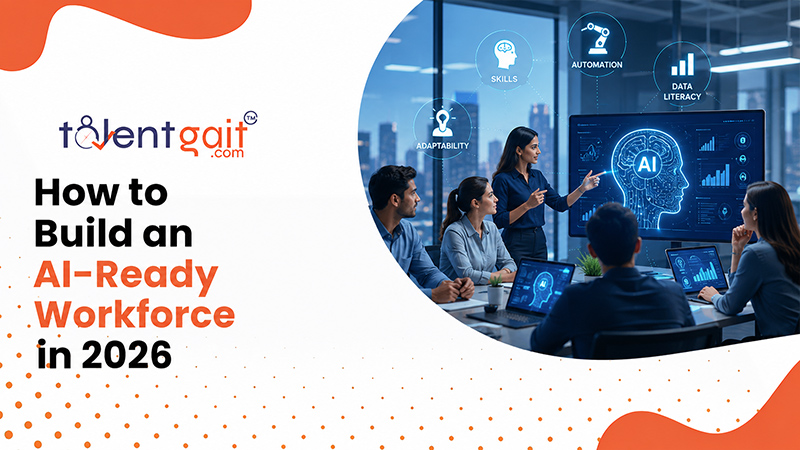
Most companies are adopting AI tools at a fast pace. But many teams are not prepared to use them well. Research shows 87% of firms report AI skill gaps today. Hiring new talent alone will not fix this problem. The talent pool is too small to meet current demand. The real solution lies within your own teams. Treat skill building as an ongoing effort, not a one-time event. This is what an AI-ready workforce looks like now.
The Skill Gap Is Real and Growing Fast
AI adoption has moved ahead of workforce readiness across most industries. Data from 2026 shows 92% of HR leaders see AI skills as critical. Yet 68% of companies are only now starting formal training programmes. Firms that invest in AI upskilling see 40% better employee productivity. Teams without training struggle to work with tools already in place. The gap between prepared and unprepared companies keeps growing. The difference now is not which tools you buy. It comes down to how well your people use them.
What Being AI-Ready Really Means
Many people mistakenly assume that workplace “AI readiness” (AI-ready) requires all employees to be able to write code. The authors of this paper propose that this term actually refers to a team’s ability to confidently interpret AI outputs, rationally question generated results, and act flexibly, a capability that covers all functional departments including HR, finance, and operations. For individual employees, this standard requires the ability to collaborate with AI, identify errors, and exercise sound judgment when problems arise.
Technical Skills Your Teams Need Right Now
AI skill gaps often show up in three main areas at work. These are data reading, prompt writing, and workflow use. Role-based training works better than broad, generic training sessions. Different teams need different levels of AI fluency to succeed. Start building these five skills across your workforce right away.
- AI literacy and output reading – staff must know what AI results mean and where they go wrong
- Prompt writing and query design – a core skill for anyone using AI tools at work
- Data sense-making – reading reports and drawing clear, useful conclusions from them
- Tool integration in daily work – knowing how AI fits into systems your team already uses
- Spotting errors in AI responses – a key skill for any role where AI drives decisions
Role-based training with real tasks works far better than broad awareness sessions alone.
Human Skills That AI Cannot Replace
The top skills in demand right now are not technical ones. Teams that built AI-ready workforces found the human side hardest. Good communication and clear thinking drive better AI outcomes. Adaptability helps your team adjust as tools change over time. These skills decide whether your AI tools get used well or poorly.
- Critical thinking – the skill to question AI results when context is not clear
- Clear communication – briefing teams and writing good prompts with precision
- Adaptability – changing work habits as AI tools get updated or replaced
- Judgement under pressure – knowing when to trust AI and when to step in
- Cross-team collaboration – working with other teams to fix and improve AI use
Strong human skills separate teams that use AI well from those that do not.
How to Build Internal Upskilling That Works
Most training programmes fail because they stay too passive and dry. Video modules alone do not build real confidence with AI tools. Learning must be embedded directly into your team’s daily work. Pair training sessions with real business tasks your team handles. Measure progress through actual outputs, not just course completion rates.
- Micro-learning based on real tasks – short learning linked with the tools used on an everyday basis
- Micro-learning based on real tasks – short learning linked with the tools used on an everyday basis
- Internal AI champions – People within the team who lead on the adoption of AI and provide valuable insights
- Regular skill checks – review gaps every six months as AI tools change fast
- Manager involvement – managers need to be involved and support AI beyond L&D team
- The teams are organized into cross – team learning groups, that is, teams that share about their use of AI in their day-to-day work
Training tied to real work always drives stronger adoption than standalone learning modules.
What Leaders Must Do Differently in 2026
Leaders must set a clear example for AI use across the team. If senior staff avoid AI tools, their teams will follow suit. Ask about AI outputs openly during your regular team meetings. Reward staff who catch and flag errors in AI-generated work. Make AI literacy a standard part of every performance discussion now.
Conclusion
Building an AI-ready workforce needs consistent effort and clear focus. The best companies are not waiting for perfect plans to begin. They start with their current teams and close gaps step by step. Identify what is missing now and fix it one role at a time.