
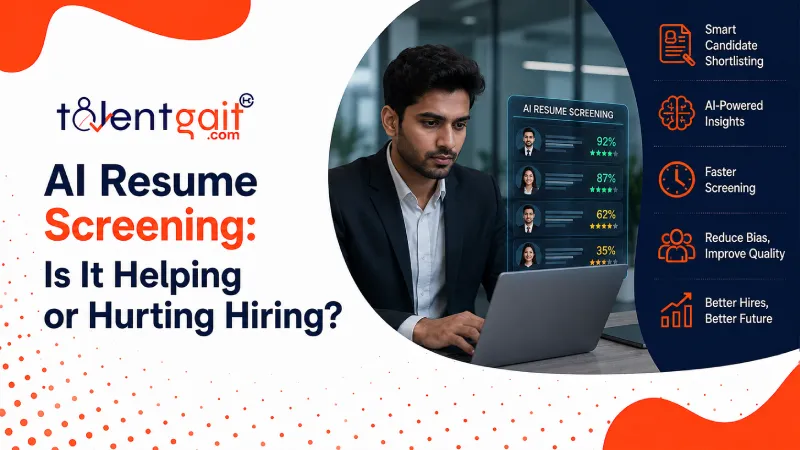
AI now screens resumes at most large companies worldwide. That shift happened fast and quietly. Hiring teams gained speed but lost some clarity. Candidates lost transparency about why they were rejected. In 2026, AI resume screening is standard practice. The real question is whether it produces better hires. Speed alone does not mean the right person got the job.
AI Screening Saves Time but Misses Real Talent
Recruiters today receive hundreds of applications for one role. No team can read every resume by hand. AI screening tools sort and rank candidates in seconds. That speed is a real and measurable operational gain. But speed creates a new problem for hiring teams. Candidates now use AI to write keyword-heavy resumes. Those resumes score well but reveal little about real skill. The shortlist looks strong on paper but isn’t. Recruiters then interview candidates who don’t fit the role. The tool did its job but not the right job. AI screening works best when it supports human judgment. It fails when it replaces human judgment entirely.
Candidate Trust Is Tied to Fair Screening
Candidates want to know why they were rejected. AI tools rarely give them a clear answer. A career gap or non-linear path gets flagged as a risk. Qualified people are filtered out before any human reviews them. That outcome damages your employer brand over time. Slow, unclear processes push good candidates to other companies. Human review keeps screening fair and legally defensible.
These Signs Mean Your Screening Process Is Broken
Poor AI screening doesn’t always look like an obvious failure. It quietly produces the wrong results every hiring cycle.
Watch for these five warning signs in your process:
- Your shortlist quality is low despite high application volume
- Strong candidates drop out before the interview stage
- Recruiters can’t explain why a candidate ranked highly
- Most resumes look templated and sound the same
- Candidates report receiving no feedback or response
Fix the process before adding more screening automation to it.
Areas That Shape Screening Quality in 2026
Candidates Are Writing Resumes for Machines
Job seekers now mirror job descriptions word for word. Resumes are built to pass filters, not impress humans. The shortlist fills with candidates who gamed the system. Real capability gets buried under keyword density. Skills-based screening catches what resume parsing misses.
Recruiters Using Unofficial AI Tools Create Real Risk
Many recruiters paste resumes into unauthorised AI tools. The company carries legal liability for those decisions. Most organisations don’t know this is happening at all. Unsanctioned AI use creates compliance gaps that audits expose. Clear policy and approved tools close that gap fast.
Legal Scrutiny of AI Hiring Is Growing Fast
Illinois, Colorado, and California all have active AI hiring laws. Lawsuits against AI hiring vendors are in court now. Bias in screening data creates discrimination liability for employers. That liability exists even when discrimination wasn’t intentional. Employers must document how AI tools influence hiring decisions.
Human Oversight Is a Legal Requirement Now
Several jurisdictions require humans to review AI recommendations. That human must have the authority to override the tool. Training on how the AI works is also required. Oversight listed in a policy document doesn’t count legally. Actual review, with records, is what regulators want to see.
Slow Communication Loses Candidates to Competitors
Research shows 42% of candidates leave due to slow responses. AI screening can move fast from the employer’s side. Candidates still wait days or weeks to hear anything. That silence reads as disrespect, not process. Fast screening means nothing without fast candidate communication.
Job-Relevant Signals Beat Resume Keywords Every Time
Years of experience don’t predict job performance reliably. Job titles tell recruiters very little about actual capability. Learning agility and problem-solving history are stronger predictors.
Structured, skills-based screening surfaces those signals clearly. Resume keyword matching can’t measure how someone actually works.
Conclusion
AI resume screening is a practical tool when used with care. It brings structure and speed to high-volume hiring processes. Used without oversight, it filters the right people out. It also exposes organisations to real legal and reputational risk. Governance, human review, and honest candidate communication make it work. Without those three things, the process just fails faster.